

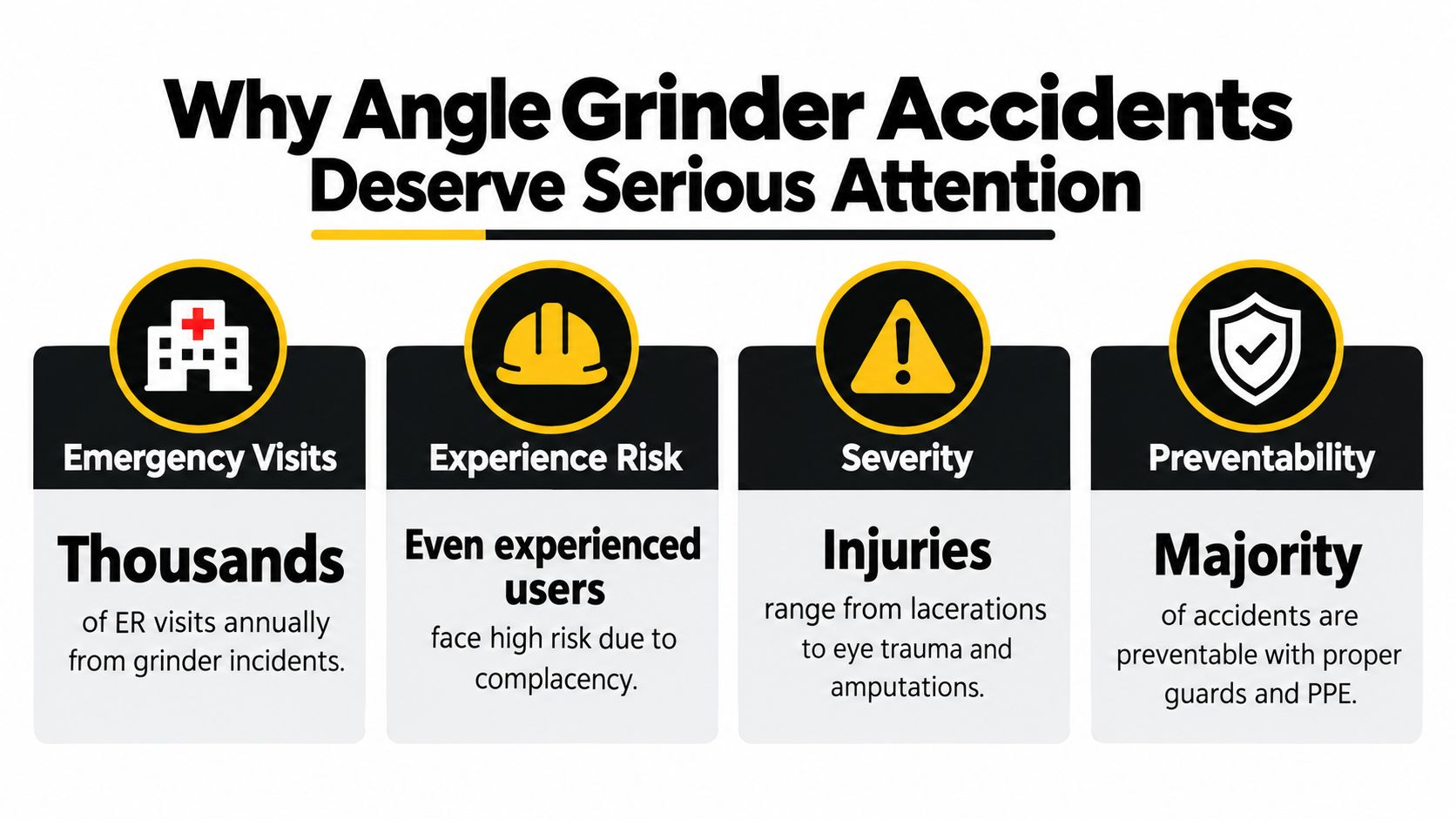
Angle grinder accidents are not rare workshop mishaps. A UK injury analysis reported an average of 5,400 angle-grinder injuries per year during 2000–2002, and later clinical literature ranked the tool as the third most dangerous tool in that surveillance system. The same review connects more than 5,000 documented injuries each year with angle-grinder use, largely through mechanisms such as wheel shattering and loss of control. (orthopedic review of angle-grinder injuries)
The practical lesson is simple: gloves alone won't make a grinder safe. You need the right wheel, an intact guard, secure material, controlled body position, suitable eye and face protection, and a work area that won't turn sparks into a fire or dust into an exposure. That applies equally to a Sacramento contractor cutting rebar, a Central Valley property manager trimming gate hardware, and a homeowner removing rust in a garage.
Why Angle Grinder Accidents Deserve Serious Attention
A prospective study recorded 82 angle-grinder injuries among 742 acute hand-and-forearm injuries treated at one emergency department between March 2016 and March 2017. Forty-four percent of those patients were retired, showing that exposure extends beyond commercial construction to home maintenance and hobby work. (clinical injury data)
The risk is systematic, not random
A grinder combines a powerful motor, a rapidly rotating abrasive wheel, and a handheld work position. If the wheel catches, cracks, or binds, the operator has little time to correct the movement. Heat, fatigue, awkward positions, and cramped spaces make complacency more likely, even for experienced users.
The buying decision affects that risk. A low-cost grinder with a missing guard, damaged wheel, or sticking switch creates setup problems before cutting begins. A maintained cordless model still requires supported material, a controlled stance, and a position outside the wheel's path. Convenience cannot replace those controls.
HSE guidance states that nearly half of abrasive-wheel accidents involve an unsafe system of work or operator error. OSHA and NIOSH guidance emphasizes guarding, inspection, and compliant setup, including ring-testing applicable wheels before use. (OSHA and NIOSH abrasive-wheel checklist)
That standard matters on California jobsites, where a Sacramento contractor may cut rebar, a Central Valley property manager may trim gate hardware, and a homeowner may remove rust in a garage. The surrounding conditions change, but the purchasing checks remain practical: usable guard, secure two-hand grip, controllable switch, compatible wheels, and support for inspection and maintenance.
What prevention actually controls
Before the wheel touches the work, verify four areas:
- The tool, including guard, spindle, switch, cord, battery, and handle.
- The wheel, including type, condition, arbor fit, and rated speed.
- The workpiece, which must be clamped or otherwise secured.
- The operator's position, with the body outside the wheel path and a stable stance.
Eye protection remains necessary, but glasses alone do not address kickback, electrical shock, fire, or airborne dust. These controls work as a system. Skipping one can turn a routine cut into a flying fragment, electrical shock, or fire.
How Angle Grinder Accidents Happen and Where Injuries Hit
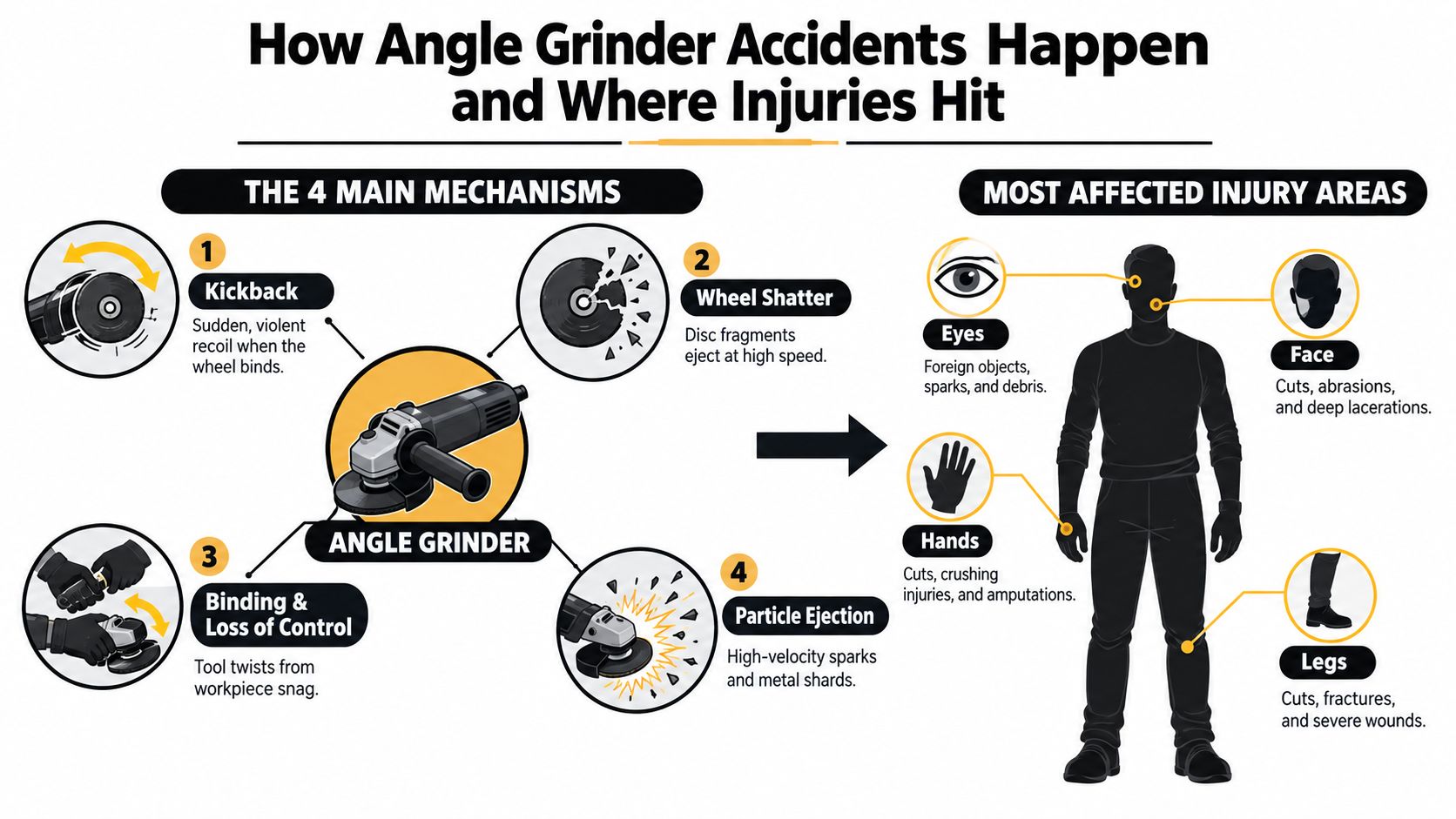
Serious angle grinder injuries often begin with a mechanical change that leaves no time for correction. A wheel catches in the kerf, the workpiece shifts, or a damaged disc fails at operating speed. Force then transfers through the tool into the operator's hands, arms, or body.
Four injury mechanisms to recognize
Kickback occurs when the disc binds or catches and the grinder recoils toward, or across, the operator. The tool can strike the hands, forearms, head, torso, or legs. Cornell's safety guidance identifies kickback as a major cause of severe lacerations. Metal particles and other debris also commonly cause eye injuries. (Cornell angle-grinder toolbox talk)
Wheel shatter is a high-energy failure. A damaged, incompatible, over-speed, or incorrectly mounted wheel can fracture and throw pieces outward. The guard helps contain fragments, but it cannot correct a missing guard, a wrong wheel, or poor installation.
Binding and loss of control develop when the cut closes on the disc, the grinder twists, or the operator forces the wheel through the material. In an OSHA accident record, a Bosch GWS8-45 bound on a metal tube, twisted while still running, and cut the worker's left hand and leg. The worker was not hospitalized, yet the case shows how a bind can injure more than the hand gripping the tool. (OSHA accident record)
Particle ejection includes sparks, metal shards, abrasive fragments, and dust. Particles can travel around the guard, particularly when the operator uses only basic safety glasses or holds the grinder at an unsuitable angle.
The hands, forearms, head, and eyes take frequent hits. A hospital injury study found that grinder injuries commonly affected the hand and head, with many occurring during work. (hospital injury study summary) That pattern fits what appears on active California jobsites, from rebar cutting in Sacramento to gate-hardware work in the Central Valley.
Eye protection remains necessary, but glasses alone do not control kickback, wheel failure, electrical exposure, fire, or dust. For embedded debris, painful vision changes, light sensitivity, or suspected eye penetration, stop work and do not rub the eye. Use this guide on when to seek emergency eye exam to judge urgency, then obtain medical care.
The Hidden Hazards Most Guides Miss
A broken disc gets attention because the damage is visible and dramatic. It isn't the only way an angle grinder injures people. SafeWork SA logged 23 notifiable incidents in one financial year, including 9 serious lacerations from unsecured material, 3 kickback cases, 1 asbestos exposure, 1 disk-shatter eye or facial injury, 1 grass fire, and 7 electric shocks. (SafeWork SA incident alert)

Rank the hazard before choosing the PPE
A practical pre-job ranking looks like this:
- Unsecured material: The workpiece can move, pinch the disc, or become a projectile.
- Electrical exposure: Damaged cords, wet conditions, poor connections, and battery damage can create shock hazards.
- Fire: Sparks can ignite dry vegetation, packaging, solvents, sawdust, or hidden combustible material.
- Dust and hazardous material: Masonry dust, coatings, and asbestos-containing material require controls beyond ordinary eye protection.
- Kickback and wheel failure: These remain severe hazards, but they sit inside a wider worksite problem.
The asbestos example deserves special caution in older California buildings. If the material's composition is uncertain, stop and obtain appropriate assessment rather than grinding through it. A respirator picked from a shelf isn't a substitute for identifying the hazard and following the applicable work practices.
The worksite is part of the tool
A grinder doesn't know whether you're cutting near dry weeds, insulation, fuel, or a power lead. The operator has to inspect the area, remove combustibles, control bystanders, and route cords away from the cut. Central Valley crews also need to account for dry summer conditions, where a spark can travel into grass or debris after the tool is switched off.
Nearly half of abrasive-wheel accidents are associated with unsafe work systems or operator error, according to HSE guidance cited in the earlier section. That means prevention starts before PPE. The right question isn't only “Which face shield should I buy?” It's “What can move, ignite, shock, or become airborne during this task?”
Essential PPE and Safety Setup That Actually Prevents Injury
Safety glasses provide a baseline, not a complete eye and face system. A University of New Mexico grinder injury review notes that glasses may not stop microscopic particles during metal cutting and recommends goggles or a full-face shield. Glasses alone also leave the face exposed to sparks, fragments, and dust.
Use properly rated safety glasses under a face shield when the work can send material toward the operator. Choose sealed goggles for dusty cutting or grinding, hearing protection for sustained tool use, gloves that preserve control without loose material, close-fitting clothing, and respiratory protection when the material creates harmful dust or fumes.
PPE and guarding effectiveness
| Protection Type | What It Protects Against | Limitation to Know | Best Use Case |
|---|---|---|---|
| Safety glasses | Direct particles and ordinary debris | Gaps can remain around the sides and above the lenses | Baseline eye protection under additional face protection |
| Sealed goggles | Dust and particles entering around the eyes | Can fog and may reduce comfort in hot work areas | Dusty cutting, grinding, and enclosed work |
| Full-face shield | Face and facial debris exposure | It should not replace safety glasses underneath | Wheel work with significant sparks or fragment risk |
| Wheel guard | Some fragment and spark direction | It cannot correct a missing, damaged, or badly positioned guard | Every compatible cutting or grinding task |
| Hearing protection | High tool noise | Does not control the mechanical hazard | Extended grinding and cutting |
| Respiratory protection and extraction | Dust and fumes | Requires correct selection and fit | Masonry, coatings, and dusty materials |
| Gloves and close-fitting clothing | Abrasion, heat, and minor contact hazards | Gloves do not stop kickback or wheel fragments | Controlled handling and general site protection |
OSHA's training material lists flying particles, inhaled dust or fumes, kickback, fire and explosion, electrical shock, cuts, noise, and musculoskeletal strain. (OSHA angle-grinder training material) Use that list as a setup audit, not as a shopping list. Glasses address only part of the exposure.
A pre-start check that holds up in the field
- Inspect the guard and handles. They must be present, secure, and positioned to shield the operator.
- Inspect the wheel. Reject cracks, chips, distortion, contamination, or unexplained vibration.
- Check the power source. Examine the cord, plug, switch, battery, and charger for damage.
- Secure the material. Clamp it or use a stable fixture. Never hold a piece being cut with one hand.
- Clear the area. Remove combustibles, manage sparks, and keep people out of the line of fire.
- Control dust. Use suitable extraction and respiratory protection where the material requires it.
For masonry or concrete, pair the grinder with a dust attachment and vacuum when the attachment fits the tool and the vacuum is appropriate for the dust. In Sacramento and the Central Valley, inspect cooling paths and clean filters before a long cut. Hot batteries and restricted airflow make sustained work harder.
The worksite still needs its own inspection. Route cords away from the cut, keep sparks clear of dry grass and debris, and control bystanders before starting. In older California buildings, stop if the material may contain asbestos and obtain appropriate assessment. A shelf-picked respirator cannot replace hazard identification or the required work practices.
Practical rule: If the guard, wheel, material, PPE, or work area is not right, do not start the motor.
Choosing and Mounting the Right Wheel for the Job
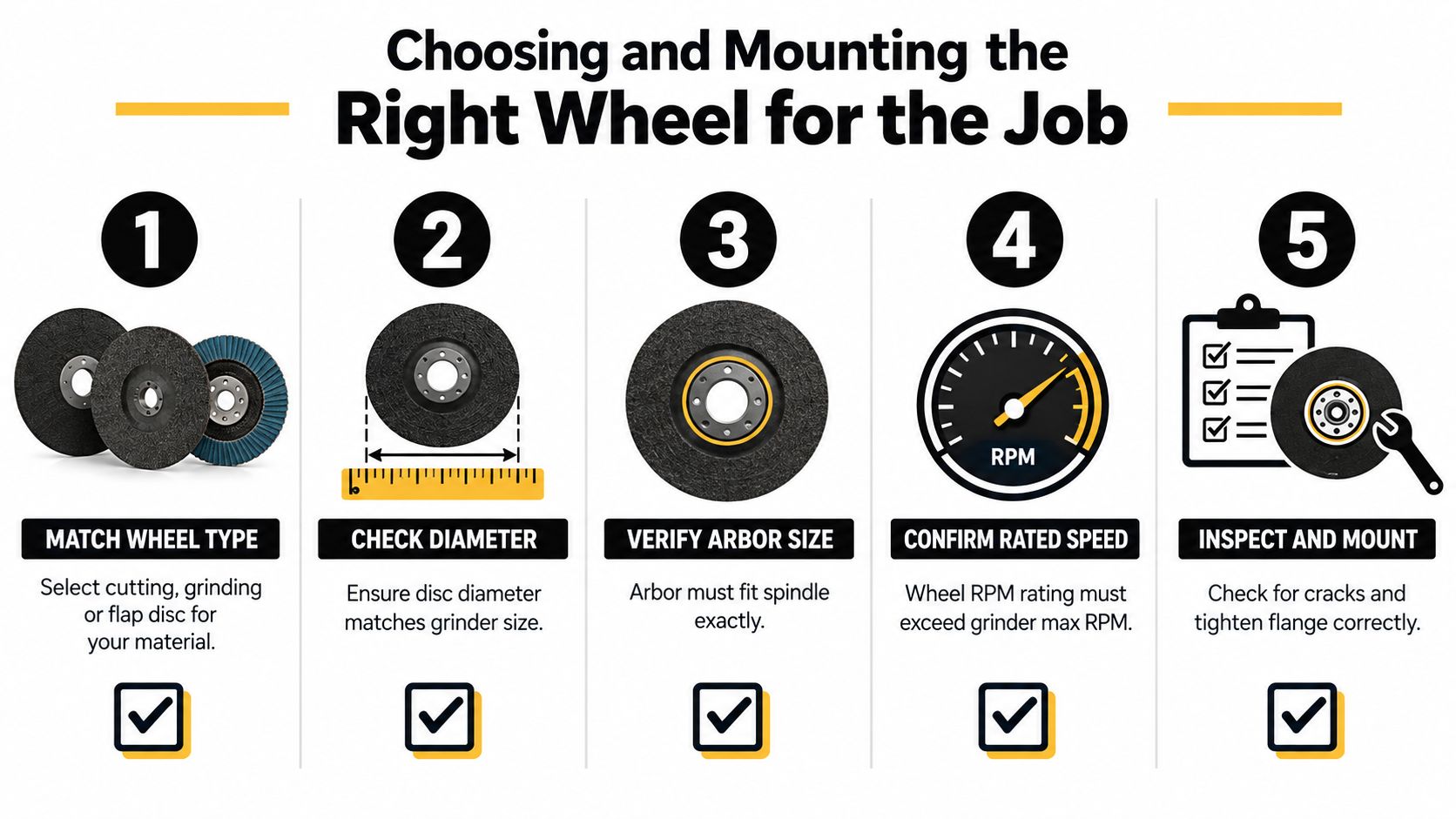
Wheel selection is a compatibility decision, not a matter of grabbing the disc with the most aggressive label. Match the wheel to the material and operation first, then verify diameter, arbor, and rated speed against the grinder and manufacturer instructions.
Match the wheel to the work
| Wheel category | Practical strengths | Trade-offs | Ideal user |
|---|---|---|---|
| Cutting disc | Makes narrow cuts in suitable metal or masonry materials | More vulnerable to side loading and binding | Fabricators, remodelers, and maintenance workers |
| Grinding wheel | Removes welds, burrs, and rough material | Removes material less precisely than a cutting disc | Welders and metal repair crews |
| Flap disc | Blends, deburrs, and finishes metal | Not the right choice for deep stock removal or cutting | Fabricators prioritizing surface finish |
| Masonry or diamond-type accessory | Suited to specified stone, tile, or concrete work | Dust control and material compatibility become critical | Tile setters and seismic retrofit crews |
A cutting wheel should cut, not serve as a side-grinding wheel. A grinding wheel shouldn't be forced into a narrow cut. For California retrofit work, choose an accessory specifically rated for the steel, concrete, or masonry application instead of assuming one disc handles every phase.
Verify the numbers before mounting
The wheel diameter must match the grinder's approved size. The arbor or center hole must fit the spindle and flanges correctly, without improvised bushings or a loose fit. The wheel's rated operating speed must meet or exceed the grinder's maximum speed. Exceeding the rating increases the risk of fragment ejection.
Inspect the wheel under good light and ring-test applicable wheels according to the relevant safety guidance before mounting. Install the correct flanges, seat the wheel squarely, tighten it as directed, and refit the guard before starting the tool. After mounting, run the grinder in a controlled position without placing your body in the wheel plane, and stop immediately if it vibrates, wobbles, or sounds abnormal.
Cordless buyers should remember that a bare tool, or herramienta sola, may not include a battery, charger, wheel, or guard configuration needed for a specific task. A brushless, or sin escobillas, grinder can be a sensible choice for mobile work, but it still needs the same wheel inspection and guarding discipline. Review power tool safety tips before treating a new grinder as ready for work.
Safe Operation Maintenance and Emergency Response on the Jobsite
Control the grinder before it controls the cut. Use both hands where the design allows, install the auxiliary handle, and stand beside the wheel's cutting plane. Keep the tool moving smoothly. Do not twist a cutting disc in the kerf or force it when the wheel slows, because added pressure increases heat and binding risk.
Support the material before starting. A tube, sheet, or bar that shifts can pinch the wheel or throw the workpiece. Clamp the stock, support the offcut, and decide where the grinder and your body will move if the disc catches. Keep helpers out of the cut's recoil path.
A jobsite scenario worth remembering
The OSHA Bosch GWS8-45 incident described earlier involved a grinder binding on metal tube, twisting while still running, and injuring the worker's hand and leg. The practical lesson is body position. Keep your torso and legs away from the likely recoil path, and never allow someone to stand directly behind the cut.
A grinder can create dust, fumes, fire, electrical shock, noise, and awkward-position strain in addition to cutting hazards. On a 100°F-plus Sacramento or Central Valley summer jobsite, let battery tools and packs cool according to the manufacturer's guidance, keep vents clear, and avoid sealing a hot tool in a truck immediately after heavy use. Control dust at its source. Keep cords away from water and sharp edges, and check that sparks cannot reach dry vegetation, fuel, or stored materials.
Glasses alone do not control these risks. Use the face and hearing protection required for the task, maintain ventilation or extraction, and stop work when the material or environment changes. A practical right-angle grinder guide can help crews match setup and handling to the work.
Maintenance and first response
Before each shift, inspect the guard, handles, switch, cord or battery, spindle, flanges, and wheel. Clear dust from vents and keep extraction equipment working. If the grinder vibrates or its sound changes, shut it down, disconnect power, and investigate. Do not restart it just because the cut is nearly complete.
If an incident occurs:
- Stop the tool: Release the switch, disconnect the cord, or remove the battery when safe.
- Control bleeding: Apply direct pressure with clean material unless an embedded object prevents it.
- Protect the eye: Do not rub or press an injured eye, and do not remove embedded debris.
- Get medical help: Severe bleeding, vision changes, penetrating injury, deep lacerations, burns, electric shock, or suspected hazardous exposure require prompt professional care.
- Record the event: Preserve the wheel, tool condition, and worksite details for medical, safety, and reporting purposes.
Workers injured on a construction site may need guidance about construction accident workers comp, especially when treatment or work capacity is affected. A disciplined shutdown, inspection, and response process protects the crew after the tool stops as well as during the cut.
Who This Setup Is For and How to Buy Smart at Value Tools Co
Who This Is For
This setup suits professional metalworkers, welders, remodelers, maintenance crews, property managers, and serious DIY users who need one handheld tool for cutting, grinding, deburring, rust removal, or masonry work. Corded grinders suit benches and shops where uninterrupted power matters. Cordless models suit punch-list repairs, remote work, and locations where a long extension cord creates trip or electrical hazards.
For Sacramento and Elk Grove crews, local availability affects job planning. A grinder that arrives quickly or can be collected nearby is easier to replace before work stops. That convenience does not justify skipping wheel compatibility, guard installation, or PPE checks.
Who Should Avoid This
Do not use an angle grinder if you cannot identify the material, select a compatible wheel, secure the workpiece, or control dust and electrical hazards. Suspected asbestos-containing material requires proper assessment and controls before grinding. Anyone with limited grip strength, unstable footing, poor visibility, or no suitable face protection should choose another process or bring in a trained professional.
A grinder is only one part of the setup. The purchase must also cover the wheel, guard, handles, eye and face protection, dust control, and the power source. Glasses alone do not address face strikes, sparks, inhalation, electric shock, or fire exposure.
Value Tools Co offers tested and inspected tools, including open-box and bare-tool options advertised at up to 55% savings. Its 30-Day Peace of Mind Guarantee covers returns by mail or in-store, free return shipping on defective items, and support for comparing corded, cordless, brushless, and complete-kit configurations. Northern California customers can also check for 1-day delivery and same-day Elk Grove warehouse pickup where available.
Compare the complete setup rather than the grinder price alone. Confirm the wheel type and size, guard design, battery requirements, handle arrangement, and protective equipment before ordering. A lower-cost bare tool is useful only when the required battery, charger, guard, wheel, and PPE are already available and suitable for the job.
People Also Ask about angle grinder accidents
What is the main cause of angle grinder accidents?
Common causes include an unsafe work system, operator error, wheel failure, kickback, unsecured material, and inadequate guarding. A safe purchase cannot correct poor work positioning or a missing inspection, so review the task and controls before the tool reaches the material.
Are safety glasses enough for an angle grinder?
Safety glasses provide baseline eye protection, but gaps can still admit high-velocity fragments, sparks, or dust. Use suitable goggles or a full-face shield over safety glasses when the task creates fragment, spark, or heavy dust exposure. The correct choice depends on the material, wheel, and work position.
What should you do after an angle grinder eye injury?
Stop the tool and keep hands away from the injured eye. Do not rub, press, or remove embedded material. Obtain urgent medical assessment for penetrating injury, vision changes, severe pain, or debris that does not clear. Preserve the tool and wheel condition for the incident review.
Choose a tested and inspected grinder from Value Tools Co, then pair it with the correct wheel, intact guard, and complete face and eye protection before starting work. Compare open-box and bare-tool options, check the 30-Day Peace of Mind Guarantee when applicable, and arrange delivery or Elk Grove pickup around a controlled jobsite setup.


