

You're probably standing beside a job that starts tomorrow, holding a metric drawing in one hand and an imperial drill index in the other. A 12mm drill bit measures exactly 12.000 mm, or 0.4724 inches, and the closest common fractional size is 15/32 inch, at 0.4688 inch. That difference is small on paper, but it can change an anchor fit, bolt clearance, or hole alignment.
The diameter alone doesn't tell you whether the bit is right. Material, point geometry, shank system, drill speed, hole tolerance, and the equipment in your truck all matter. In Northern California, that decision also has a practical side. If a Sacramento or Central Valley crew needs a replacement before the next shift, local availability can matter as much as the sharpness of the tip.
Understanding the 12mm Drill Bit and Its Exact Dimensions
A 12mm drill bit is 12.000 mm across its cutting diameter, which converts to 0.4724 inches. The nearest fractional substitute is 15/32 inch, or 0.4688 inch, leaving the fractional bit about 0.094 mm smaller than the metric size. That gap is documented in this metric and imperial drill-bit conversion reference, and it's enough to matter when a hole must accept a particular anchor, bolt, sleeve, or fitting.
| Specification | 12mm drill bit |
|---|---|
| Metric diameter | 12.000 mm |
| Decimal imperial equivalent | 0.4724 inch |
| Nearest fractional size | 15/32 inch |
| Fractional diameter | 0.4688 inch |
| Difference from 15/32 inch | About 0.094 mm |
| Example jobber overall length | 151 mm |
| Example maximum drilling depth | 77 mm |
The listed jobber dimensions show why you shouldn't buy by diameter alone. One industrial catalog lists a 12mm bit with 151 mm overall length and 77 mm maximum drilling depth, so the usable reach depends on the bit's construction, flute length, shank geometry, and application standard. Check the manufacturer's dimensional drawing before assuming a standard bit will reach through a thick plate or framing assembly. McMaster-Carr's 12 mm shank-size listings illustrate how diameter and overall tool dimensions are separate specifications.
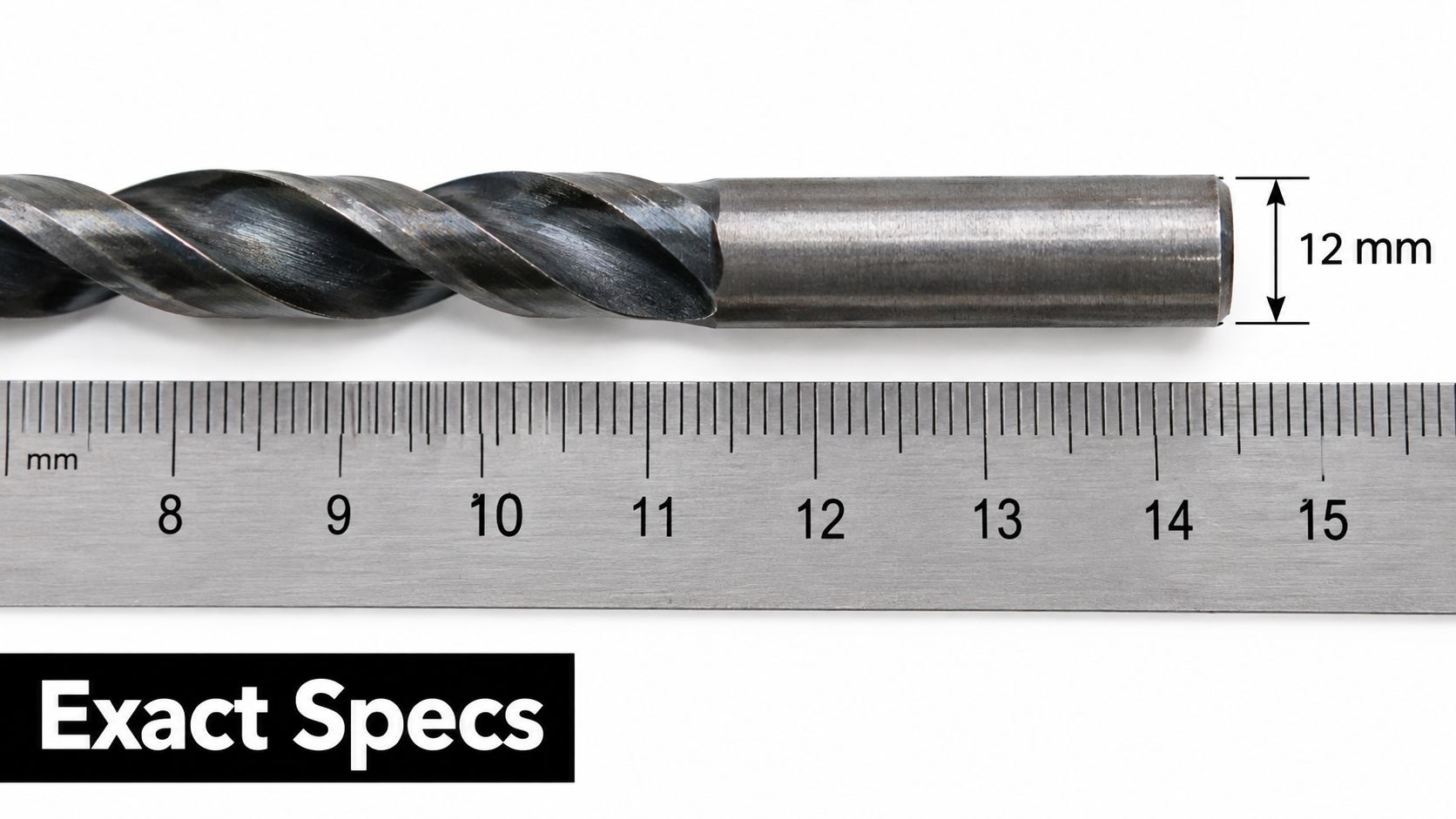
For metric work, use the actual 12mm bit when the drawing or hardware calls for it. A 15/32 inch bit may be acceptable for a loose clearance hole, but it isn't a true substitute where the hole size controls anchor expansion, bolt movement, or a close fit.
Material Choices for Metal, Wood, and Masonry
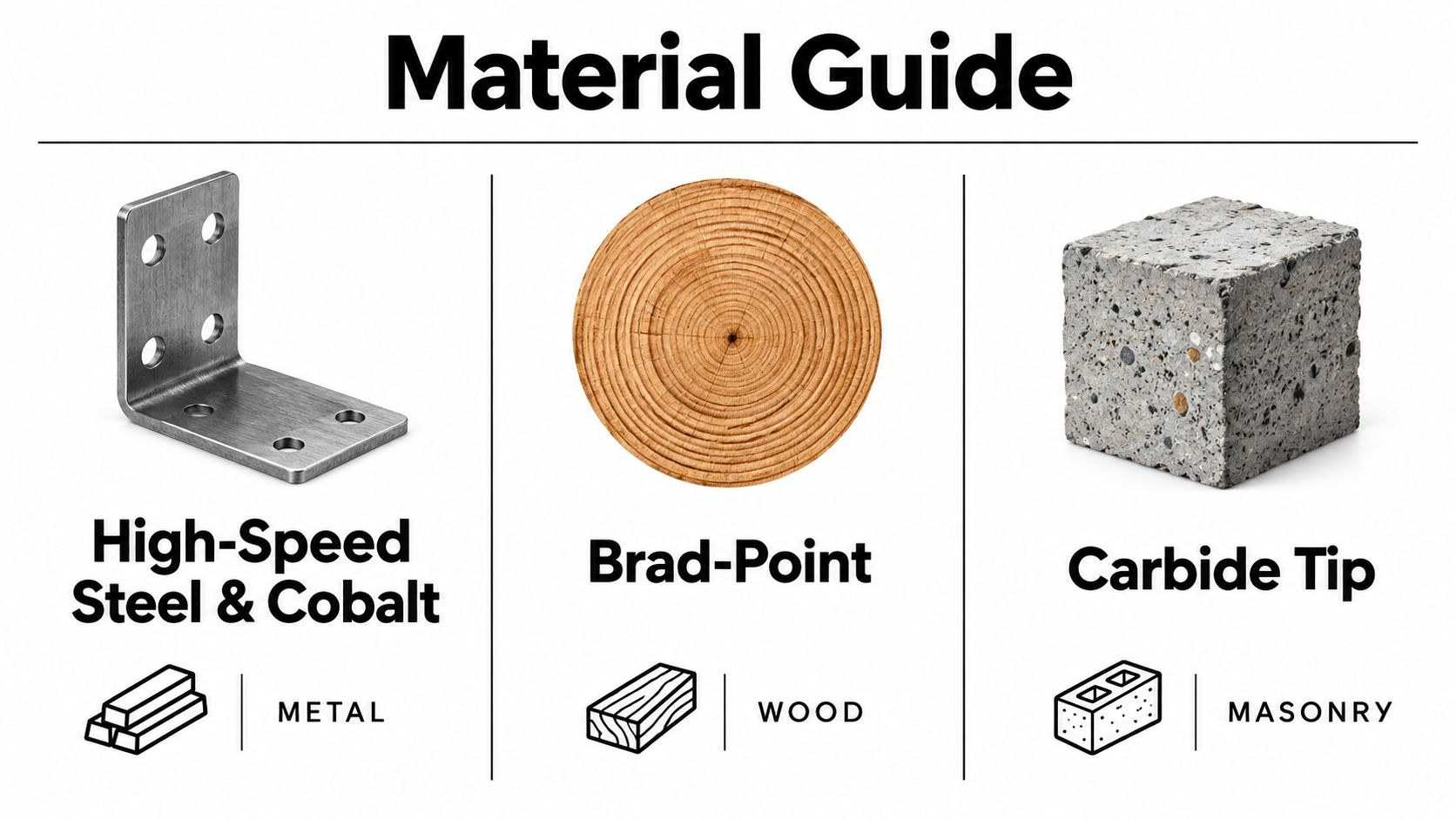
A 12mm diameter appears in several completely different tool families. HSS and cobalt bits cut metal, brad-point bits cut wood, and carbide-tipped masonry bits cut brick, block, and concrete. The diameter is shared, but the tip shape, flute design, and working method are not interchangeable.
| Substrate | Suitable 12mm bit style | What works | What fails |
|---|---|---|---|
| Steel and cast iron | HSS twist bit, cobalt for demanding work | Controlled feed, low speed, cutting fluid on steel | High speed, dull edge, dry drilling where heat builds |
| Wood | Brad-point or suitable wood bit | Center spur, clean entry, chip clearance | Forcing a metal bit when a clean wood hole matters |
| Masonry and concrete | Tungsten-carbide-tipped masonry bit, SDS-plus style where appropriate | Hammer drilling with dust removal | Using an HSS twist bit in concrete |
For ordinary steel, a 12mm HSS twist drill is the practical starting point. A standard DIN 338 or BS 328-style bit commonly uses a 118° point angle and around 101 mm drilling length, as shown in the CK Tools 12mm HSS drill-bit specification. Cobalt makes more sense when heat and abrasion are persistent, especially in harder alloys or stainless work. It costs more and can be less forgiving of side loading, so it isn't automatically the right upgrade for occasional mild-steel holes.
Wood needs a different approach. A brad-point bit starts on the center spur, scores the perimeter, and removes the waste with its cutting wings. That geometry helps prevent wandering and breakout, particularly when the finished hole will be visible. A metal twist bit can drill wood, but it usually won't give the same clean entry or predictable chip control.
Masonry is the hard boundary. A steel twist bit doesn't cut mineral aggregate effectively, and hammer action can damage its edge almost immediately. Use a carbide-tipped masonry bit or an SDS-plus masonry bit matched to the hammer drill. This 12mm drill-bit selection guide shows why 12mm products span HSS, cobalt, SDS-plus, SDS-max, flat wood, and diamond-core formats rather than forming one universal category.
For a deeper metal-specific reference, use Value Tools Co's guide to drill bits for metal. It's useful when the job changes from mild steel to stainless, cast iron, brass, or another material with different heat and chip behavior.
Optimizing Drill Speeds and Feeds for Different Substrates
A 12mm bit removes a substantial amount of material with every revolution, so heat control matters more as diameter increases. Run it too fast and the tip overheats. Push too hard with a poor setup and the bit can grab, bend, or break. The correct feel is a steady bite that produces chips without forcing the drill into a stall.
Match the setting to the material
In steel and cast iron, use a slower setting than you'd choose for a small pilot bit. Keep the drill square, apply firm and even feed pressure, and use cutting fluid on steel or cast iron where the bit and workpiece are generating heat. A 118° point gives stable entry for general metal work, but it needs more thrust than a 135° split point.
Wood tolerates faster drilling, but speed alone won't save a poor cut. Let the brad point establish the center, support the exit face, and ease off as the tip breaks through. If the bit starts smoking, the edges are rubbing instead of slicing, or the wood fibers are burning.
Practical rule: If the bit is hot enough that you're tempted to grab it with a bare hand, stop and correct the speed, feed, chip clearance, or lubrication before continuing.
Masonry uses a different rhythm. Let the hammer drill fracture the material rather than leaning your full body weight into it. Withdraw the bit periodically to clear dust, particularly in a deep hole, and use a dust extractor or suitable eye and respiratory protection. For concrete work, Value Tools Co's concrete-drill guide can help match the drill system to the substrate.
Never use hammer mode on a metal twist bit. The impacts don't improve the cut, and they can damage the workpiece, chip the bit, and create a wandering hole. For battery tools in Sacramento and the Central Valley, hot summer conditions also make it sensible to give the drill and battery time to cool between demanding holes rather than running a high-torque setup continuously.
Shank Types and Pilot Hole Requirements for Precision
The shank determines how the drill transfers torque into the cutting head. A standard straight-shank 12mm bit belongs in a suitable keyed or keyless chuck that can grip the diameter securely. A quarter-inch hex shank is designed for quick-change holders and impact-driver-style convenience, but the holder and bit must be rated for the torque and application. An SDS-plus bit is for a compatible rotary hammer, not a conventional drill chuck.
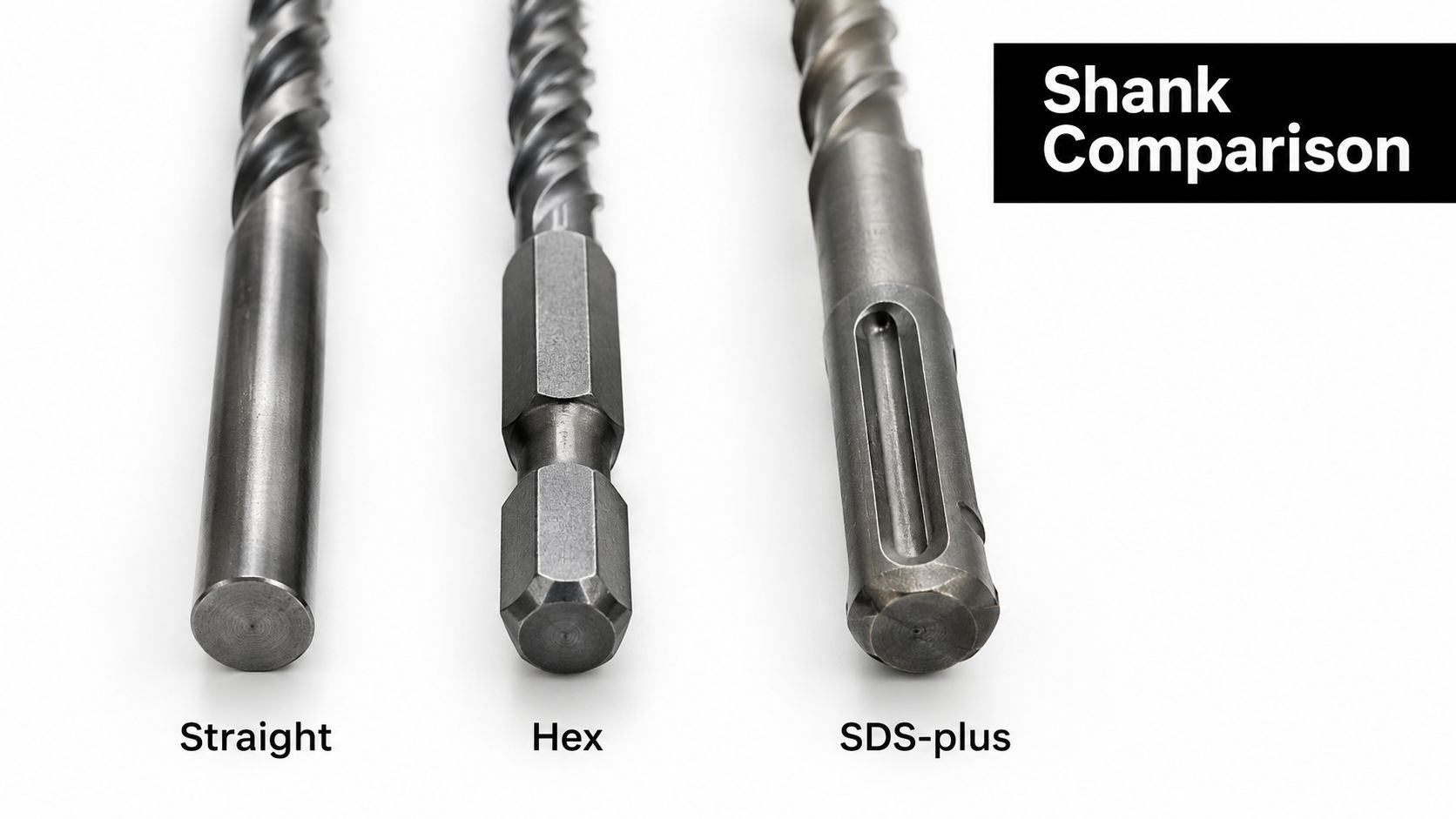
A full-size 12mm cutter places meaningful torque through the shank, especially when it breaks through sheet or plate. Tighten the chuck evenly, remove debris from the jaws, and clamp the workpiece instead of holding it by hand. A slipping shank leaves burn marks, damages the chuck, and can turn a straight hole into an oversized one.
Start accurately, then open the hole
On metal and hardwood, a pilot hole gives the larger bit a controlled path. Mark the center with a punch on metal or a brad-point center spur on wood, then start with a smaller bit that can establish the location without wandering. The pilot must be large enough to guide the final bit but not so large that the 12mm cutting edges lose stable support.
For a thick workpiece, drill in stages and clear the flutes rather than burying the full bit in packed chips. Keep the final bit perpendicular to the surface, especially when the hole will receive an anchor or bolt. A drill guide, magnetic drill, or rigid stand is preferable when alignment matters more than speed.
The following video shows the practical difference between shank systems and drill setup:
A quarter-inch hex shank and a 12mm cutting diameter describe different parts of the tool. The first identifies the drive end, while the second identifies the hole diameter. Don't assume a quarter-inch hex bit makes a quarter-inch hole.
Smart Buying and Maintenance Practices for Professionals
A crew in Elk Grove can lose more time waiting for one missing bit than drilling the actual holes. If a job is scheduled for the next morning, check local stock and pickup options before ordering from a distant supplier. Same-day Elk Grove warehouse pickup or fast one-day Northern California delivery can be practical advantages when a metric drawing has already been issued and the material is on site.
Value Tools Co operates as an online and local retailer in Elk Grove, offering drill bits and related equipment alongside open-box and lightly used tools. Its inventory can include cordless drills, hammer drills, impact drivers, and combo kits, so the buying decision should still start with the bit type and drill system, not the discount. For selection criteria, use this guide to choosing the right drill bit.

Inspect before the bit enters the chuck
Open-box stock can make sense for a professional who knows how to inspect cutting tools. Look for chipped lips, flattened margins, bent bodies, damaged shanks, rust pitting, and a point that isn't centered. A bit can look unused in a package yet still be unsuitable if its edge has been knocked against another tool.
Ask what is included and what is covered. Value Tools Co's 30-Day Peace of Mind Guarantee covers tested and inspected tools, 30-day returns by mail or in-store, and free return shipping on defective items. Open-box or bare-tool inventory, also called herramienta sola, can offer savings of up to 55% according to the retailer's stated offer, but a bare tool doesn't include a battery or charger.
For a contractor, the right purchase may be a new 12mm HSS bit, an open-box hammer drill for masonry, or a brushless, sin escobillas drill that shares batteries already on the truck. Compare the complete setup, including chuck capacity, battery availability, return terms, and whether the bit actually matches the material.
Maintenance Tips for Long-Lasting Drill Bit Performance
Clean the bit before it goes back into the case. Brush away chips, wipe off cutting fluid and dust, and inspect both cutting lips under good light. A clogged flute can make a sharp bit appear dull, while a rounded edge will keep producing heat even after the debris is removed.
Use this checklist after each demanding job:
- Clear the flutes: Remove packed steel chips, wood fibers, or masonry dust.
- Check the point: Look for chipped corners, uneven lips, or a bent body.
- Protect the surface: Wipe a light protective coating over steel bits before storage to limit rust.
- Store by size: Keep the 12mm bit separated so its tip doesn't strike neighboring tools.
- Sharpen carefully: Re-sharpen only with suitable equipment and the correct point geometry.
- Replace when necessary: A cracked, badly chipped, or visibly bent bit isn't a candidate for field repair.
Don't judge sharpness by appearance alone. If the drill squeals, produces powder instead of clean chips in metal, wanders at entry, or requires excessive pressure, stop and inspect the edge. Replacing a worn bit is cheaper than repairing an oversized hole or a damaged chuck.
Common Mistakes to Avoid When Drilling 12mm Holes
The most expensive errors happen before the bit starts cutting.
- Wrong material bit: HSS is for metal and selected general materials, not concrete. Use carbide-tipped masonry tooling for block and concrete.
- Hammer mode on metal: Impacts can chip the edge and damage the workpiece.
- Excessive speed: A large bit builds heat quickly, especially in steel. Slow the drill and control the feed.
- No chip clearance: Packed flutes increase friction and can seize the bit.
- Poor pilot sizing: A wandering starter hole leaves the final 12mm cutter off center.
- Unclamped work: A rotating plate or board can injure the operator and ruin the hole.
A clean 12mm hole comes from the correct bit family, a rigid setup, controlled speed, proper lubrication where applicable, and a measured check against the fastener or anchor specification.
Frequently Asked Questions About 12mm Drill Bits
Is a 12mm drill bit the same as 15/32 inch?
No. 12mm equals 0.4724 inch, while 15/32 inch equals 0.4688 inch, so the fractional bit is about 0.094 mm smaller. Use the exact metric bit when the fit or tolerance matters.
Can one 12mm bit drill metal, wood, and concrete?
Not reliably. HSS or cobalt suits metal, a brad-point bit suits wood, and a carbide-tipped masonry bit suits concrete and brick. Multi-material products exist, but their performance and finish depend on the substrate, heat, shank, and cutting geometry.
Is a quarter-inch shank the same as a 12mm bit?
No. The shank is the drive end that enters the chuck or holder, while 12mm identifies the cutting diameter. A bit can have a quarter-inch hex shank and still cut a 12mm hole.
What drill should I use for a 12mm masonry hole?
Use a compatible hammer drill or SDS-plus rotary hammer with a 12mm carbide-tipped masonry bit. Use a straight-shank metal bit only for metal, and don't activate hammer mode with it.
Is a 12mm bit suitable for M12 work?
It may be, but the required hole depends on whether the application needs a clearance hole, a snug fit, a tapped hole, or an anchor hole. Confirm the fastener or anchor manufacturer's specification before drilling.
Value Tools Co carries drill bits and compatible drills for metal, wood, and masonry, including open-box and bare-tool options for trade budgets. Visit Value Tools Co to check current availability, local Elk Grove pickup options, and the 30-Day Peace of Mind Guarantee before your next 12mm drilling job.


