

Corded reciprocating saws win for sustained, outlet-accessible cutting, while cordless saws win for mobility and fast setup where a cord slows the work. Reported U.S. cordless purchases exceeded 75% of new reciprocating saw purchases in 2025, up from about 60% in 2020, but that adoption trend doesn't prove cordless costs less on your jobs.
Most buyers get told to pick power or portability and move on. That's bad advice for a demolition saw, because the expensive mistakes show up after purchase, in dead packs, tangled leads, and cuts you can't finish from a ladder. Judge the Corded vs Cordless Reciprocating Saw choice by where you stand, how long you cut, and what system you already own.
Why the Corded vs Cordless Reciprocating Saw Decision Comes Down to Your Work Pattern
A saw that never stops is useless if you're dragging its cord across a roof. A saw you can carry anywhere is just as useless if its only pack dies halfway through nail-embedded framing. The right question isn't which format is stronger in the abstract. It's which format removes the most interruptions from your work.
Start with four observable variables. Duty cycle tells you whether cuts come in short bursts or back to back for hours. Cut location tells you whether you're at a bench, in a crawlspace, or on scaffolding. Outlet access tells you whether protected power is steps away or doesn't exist yet. Battery platform tells you whether a cordless saw can share packs you already own or forces you into a new charger and ecosystem.
Three Buyer Profiles That Predict the Answer
- Occasional DIY use: Short pruning, small demolition, and one-off repairs favor grab-and-go convenience, provided you already own compatible packs.
- Daily professional demolition: Repeated cuts through framing, pipe, and thick metal at a fixed site favor continuous mains power.
- Multi-site property maintenance: Fast mobilization between rooms, roofs, and exterior repairs favors cordless, provided spare packs travel with the tool.
The market has clearly moved, with reported U.S. cordless purchases exceeding 75% of new reciprocating saw purchases in 2025, compared with about 60% in 2020, according to Bob Vila's cordless reciprocating saw buying guidance. Popularity reflects mobility and better batteries, not a universal cost advantage. A remodeling crew planted next to a protected outlet can still come out ahead with a cord, while a service tech making two cuts at six addresses loses money unspooling one.
Buy for the interruption you hit most often, pack changes or cord routing, and you'll usually land on the right saw.
That framing also changes how you read spec sheets. Strokes per minute, amp rating, and voltage platform matter, but only after you've matched the power source to the job pattern. Semantic equivalents like Sawzall, demo saw, and recip saw all describe the same rough-cutting tool, and all of them punish a mismatch between tool and task.
How Power Source Changes Real Cutting Performance
A corded saw receives continuous electrical power from an outlet, so its operating duration is limited primarily by the user, the workpiece, and tool durability rather than battery capacity, as the Royal Swedish Academy of Sciences background on lithium-ion development explains in contrasting portable storage with mains supply. You feel that as consistency. The tenth cut pulls like the first, and long cuts through cast iron or nail-studded lumber don't depend on pack charge or thermal limits.
The image below frames that split between continuous supply and stored energy.
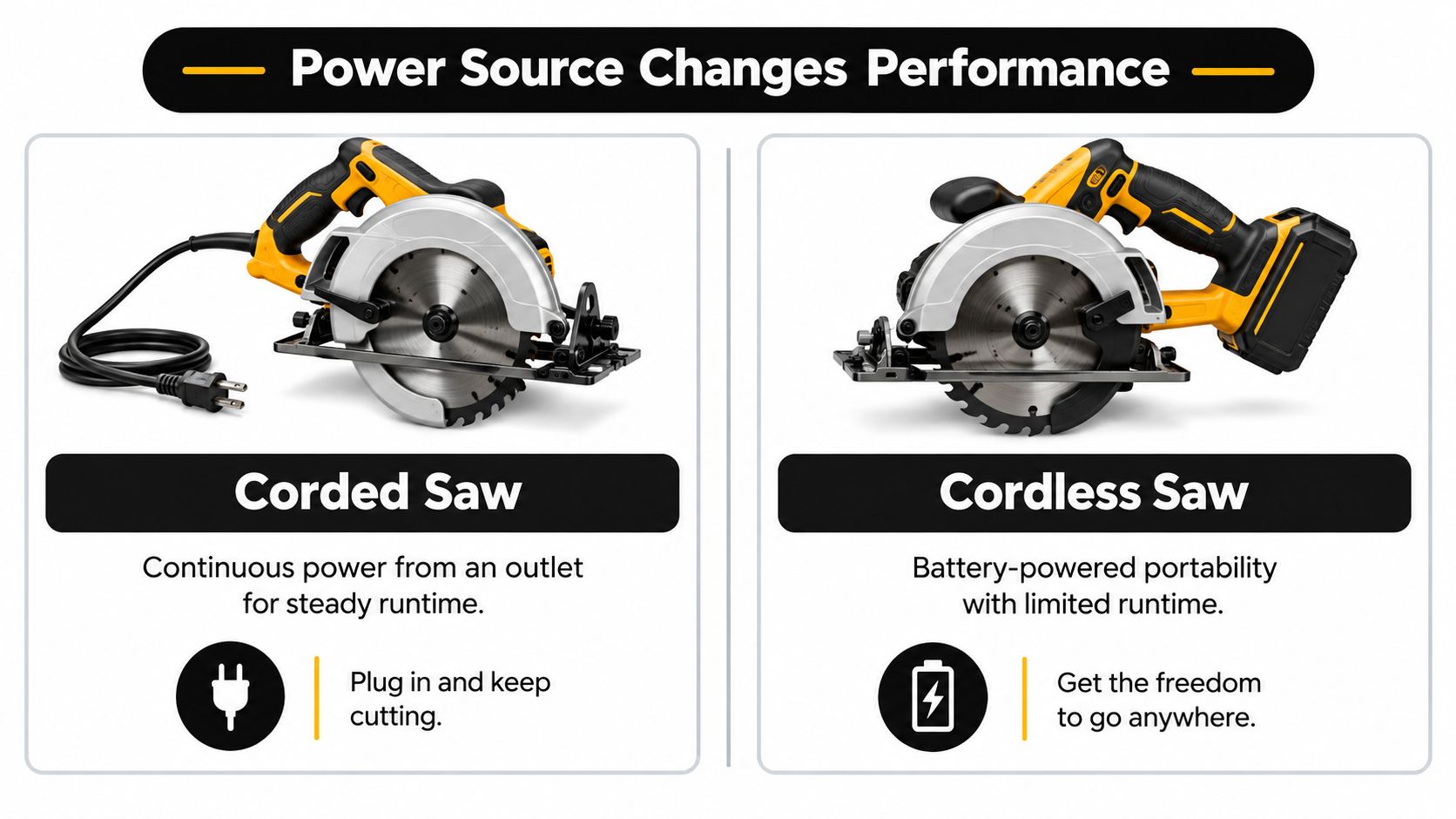
Cordless became credible for real demolition after the commercialization of lithium-ion batteries in 1991. Sony's first commercial cells delivered approximately 80 Wh/kg and about 200 Wh/L, and later commercialized cells reached approximately 120 to 150 Wh/kg, per the academy source cited above. Higher energy density meant a pack could store meaningful energy without the weight and bulk of older nickel-based systems. Add efficient brushless / sin escobillas motors and battery management electronics, and cordless moved past light household duty.
Why Amps and Volts Don't Predict Cut Speed Alone
Electrical input doesn't determine productivity by itself. In a controlled consumer test, a saw with a 1 1/8-inch stroke and 2,900 strokes per minute cut a 2x4 in approximately 18 seconds, a result covered in Bob Vila's reciprocating saw testing roundup. Stroke length, orbital action, blade tooth pattern, shoe pressure, and your technique move the needle as much as the cord label does.
Blade choice deserves the same attention as the motor. A dull wood blade dragged through steel will make either format feel weak, so match tooth count and blade material to the stock first, a point covered in this guide to choosing metal-cutting Sawzall blades. Shops cutting metal all day face the same friction and heat problem at larger scale, which is why cutting fluid guidance for machine shops is worth reading if your recip work regularly involves thick steel or cast iron.
Judge a cordless saw by what it does across a full pack, not by no-load speed. Cut time in real material, tool mass with the pack installed, and vibration under load tell you more than a box rating. Judge a corded saw by sustained output and how its cord behaves in your workspace.
Comparing Runtime, Weight, Vibration, and Maintenance
For sustained demolition, corded saws retain a practical output advantage because they draw continuous mains power rather than depending on battery state, thermal limits, or pack changes. Independent testing summarized in the Bob Vila roundup cited earlier praised a 15-amp corded model for cutting speed, while a 15-amp Makita model with active vibration control stood out for reducing hand-arm fatigue. Two saws with the same amp rating can leave your hands in very different shape by lunch.
Cordless testing gets more useful when it measures behavior under load. Pro Tool Reviews' reciprocating saw test methodology evaluates performance across PVC, dimensional lumber, nail-embedded wood, and cast iron while measuring cut time, tool mass, and vibration through a battery cycle. Its active-cut vibration scale runs from 1 (lowest) to 5 (highest), with the Makita GRJ02 and Metabo HPT CR36DA receiving the best under-load rating and the DeWalt DCS389 receiving a rating of 4. Vibration under load predicts fatigue far better than how smooth a saw feels cutting air in a store aisle.
Corded vs Cordless Reciprocating Saw Comparison
| Criteria | Corded | Cordless |
|---|---|---|
| Runtime | Continuous near a protected outlet | Limited by pack capacity and spares |
| Sustained output | Steady through long demolition cuts | Can change as charge declines |
| Weight in hand | Tool weight only, plus cord drag | Tool plus battery pack mass |
| Vibration control | Varies by model, active systems help | Varies widely, check under-load ratings |
| Mobility | Tied to outlet and extension lead | Works on roofs, ladders, remote sites |
| Maintenance | Inspect cord, plug, extension lead | Inspect packs, contacts, charger |
Weight cuts both ways. A corded saw carries no pack, but cord drag pulls at the rear handle on overhead cuts and snags on framing. A cordless saw puts all its mass in your hands, which is fine for short cuts and punishing during all-day overhead demolition with a large pack.
Maintenance is simpler than most owners make it. Corded tools need intact insulation, a sound plug, and an extension lead rated for the load, kept clear of the blade path. Cordless tools need clean battery contacts, undamaged pack housings, and sensible storage, especially in Sacramento and Central Valley summers when triple-digit heat in a closed truck bed stresses packs and slows cooling after a hard run. This overview of extending cordless tool battery life covers charging and storage habits that protect that investment.
Ergonomics decide close calls. If two saws cut at similar speed, pick the one whose vibration, grip angle, and shoe design let you keep two-handed control without fighting the tool. Durability follows the same logic, since a saw you can control binds less, bends fewer blades, and takes less abuse.
Calculating the Real Cost of Each Setup
Sticker price is the least honest number in this category. A cheap cordless bare tool / herramienta sola cuts nothing until you add a battery and charger, and one pack isn't a working system for demolition. A corded saw looks complete in the box, but it still needs an approved heavy-duty extension cord and ground-fault protection on construction work.
Run the comparison as two complete systems. List every item required to make the first cut and keep cutting, then add the labor cost of the interruptions each system creates. That's the break-even calculation most comparison articles skip.
What Belongs in Each Cost Column
- Corded system: Saw, heavy-duty extension cord, GFCI protection, cord replacement over time, and setup minutes at each new location.
- Cordless system: Saw or bare tool, at least two packs for serious work, charger, eventual pack replacement, and downtime when packs run out mid-job.
- Shared costs: Blades for each material, cases or storage, and the hearing and respiratory protection demolition demands.
OSHA requires construction workers using electric tools to have ground-fault circuit-interrupter protection or an assured equipment grounding conductor program, under OSHA standard 1926.300 for hand and power tools. That protection is a real line item for the corded column, not an optional accessory. The same standard governs switch design, so a compliant used saw holds its value better than a damaged one.
Battery runtime claims deserve skepticism. Independent buying guidance identifies cutting speed, material, blade selection, and amp-hour capacity as major variables, as noted in the Bob Vila cordless guide cited earlier. A cuts-per-charge figure earned in PVC tells you nothing about cast iron, pruning, or nail-embedded studs. Price your own work by timing cuts in your typical material with your typical blade.
Break-even rule: Cordless wins when setup, relocation, or generator costs dominate the day. Corded wins when the saw sits in one place and cuts for hours.
Open-box pricing can flip either column. A discounted cordless saw that matches packs you already own may undercut a new corded kit, while a discounted corded saw needs no platform investment at all. Run your numbers with the platform you own today, not the one a sale tempts you to start.
Matching the Saw to the Job and the Buyer
The photo below shows the two formats side by side on a bench, which is exactly where the corded case is strongest.
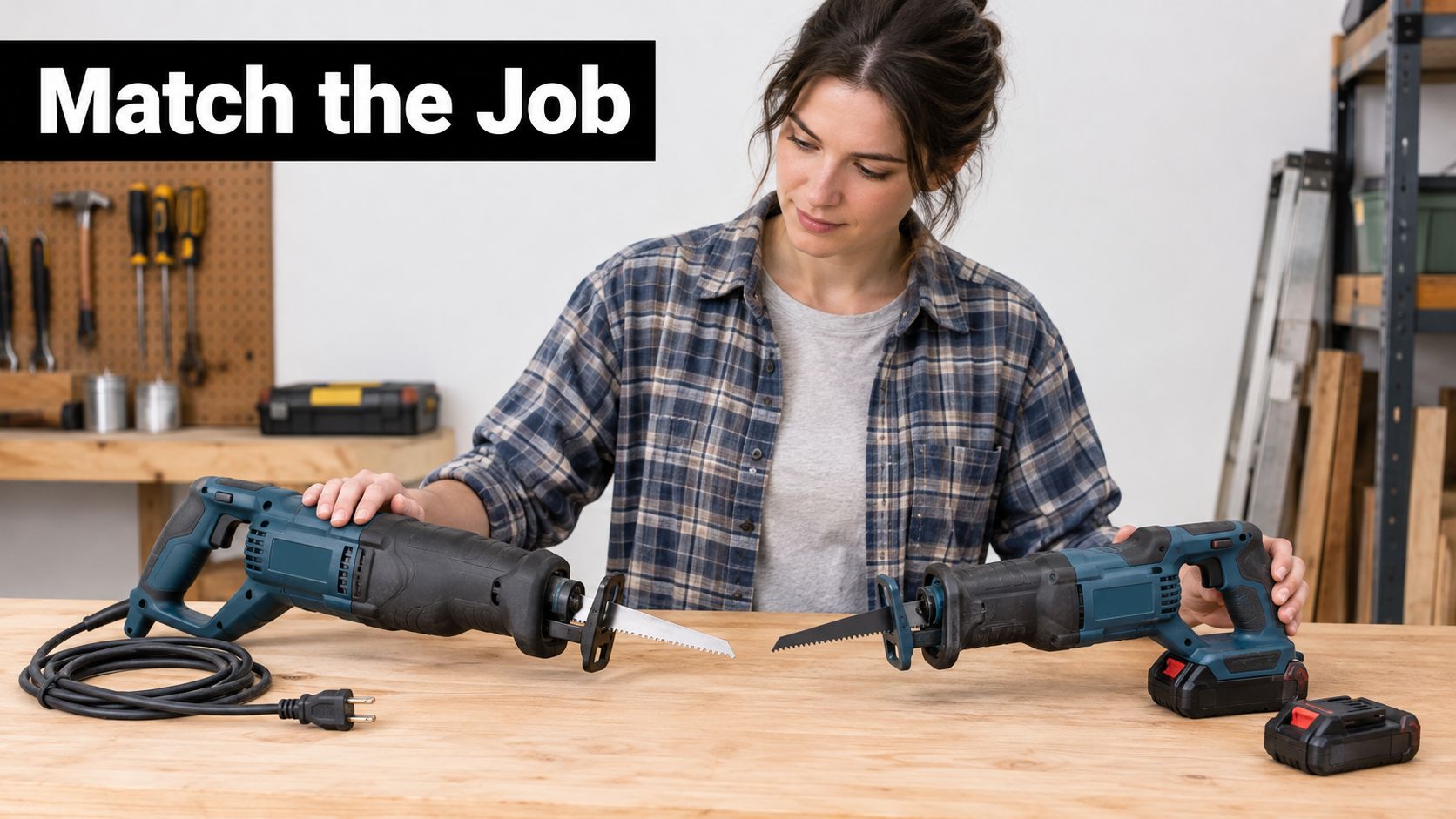
Take the remodeling crew gutting a kitchen in Elk Grove. The saw lives in one room for days, cutting studs, cast iron, and subfloor near temporary power. A corded model earns its keep there, because nobody rotates packs or loses a cut to a thermal cutoff. The same crew's punch-list tech, trimming a pipe stub in a crawlspace and pruning a limb out back, should carry cordless and a spare pack.
Deck tear-outs split the difference. Cutting old joists and ledger hardware at ground level near an exterior outlet suits a cord, while working along a fence line or out at the far edge of the structure suits battery power, especially once you start sizing replacement decking materials and moving cut stations around the yard. Property maintenance techs covering Sacramento rentals face the cordless pattern all day, with same-day Elk Grove pickup or fast Northern California delivery mattering more than a small price gap when a unit needs a repair before a tenant moves in.
The short clip below shows how cutting position and control change with the material in front of the blade.
Electrical exposure also belongs in the match. A review of construction fatalities from 2015 through 2019 reported 5,172 construction-related deaths, including 401 electrocution fatalities, or 8% of the total, with contact with energized wiring, particularly overhead power lines, accounting for most fatal construction electrocutions, according to the EasyChair-published construction fatality review. Those figures don't measure reciprocating saw incidents specifically. They do explain why removing cords and extension leads around temporary power, wet ground, and demolition debris is a legitimate risk-control consideration, not a marketing point.
California framing work adds local texture. Crews here talk about the framing nailer / clavadora de marcos and seismic detailing in the same breath, and demolition in older Central Valley housing means cutting through generations of repairs, hidden fasteners, and mixed materials. That unpredictability rewards the saw format that keeps the operator stable and the cut path visible, whichever one that is on a given wall.
Match the buyer, not just the job. A homeowner pruning twice a year shouldn't maintain a fleet of packs for one saw. A demolition contractor shouldn't accept pack rotation as a daily bottleneck. A maintenance tech shouldn't unspool a cord for a ninety-second cut.
Safety Rules and Inspection Before You Cut
Power source changes your risk profile, but it doesn't create a safe saw. OSHA lists reciprocating saws among hand-held powered tools that must have a constant-pressure control that shuts the tool off when pressure is released, and a lock-on control is permitted only if shutoff takes one motion of the same fingers used to start it, per OSHA's hand and power tool safety guide. That switch rule exists for the moment you lose your grip or drop the tool.
The checklist graphic below covers the inspection points to run before the blade moves.
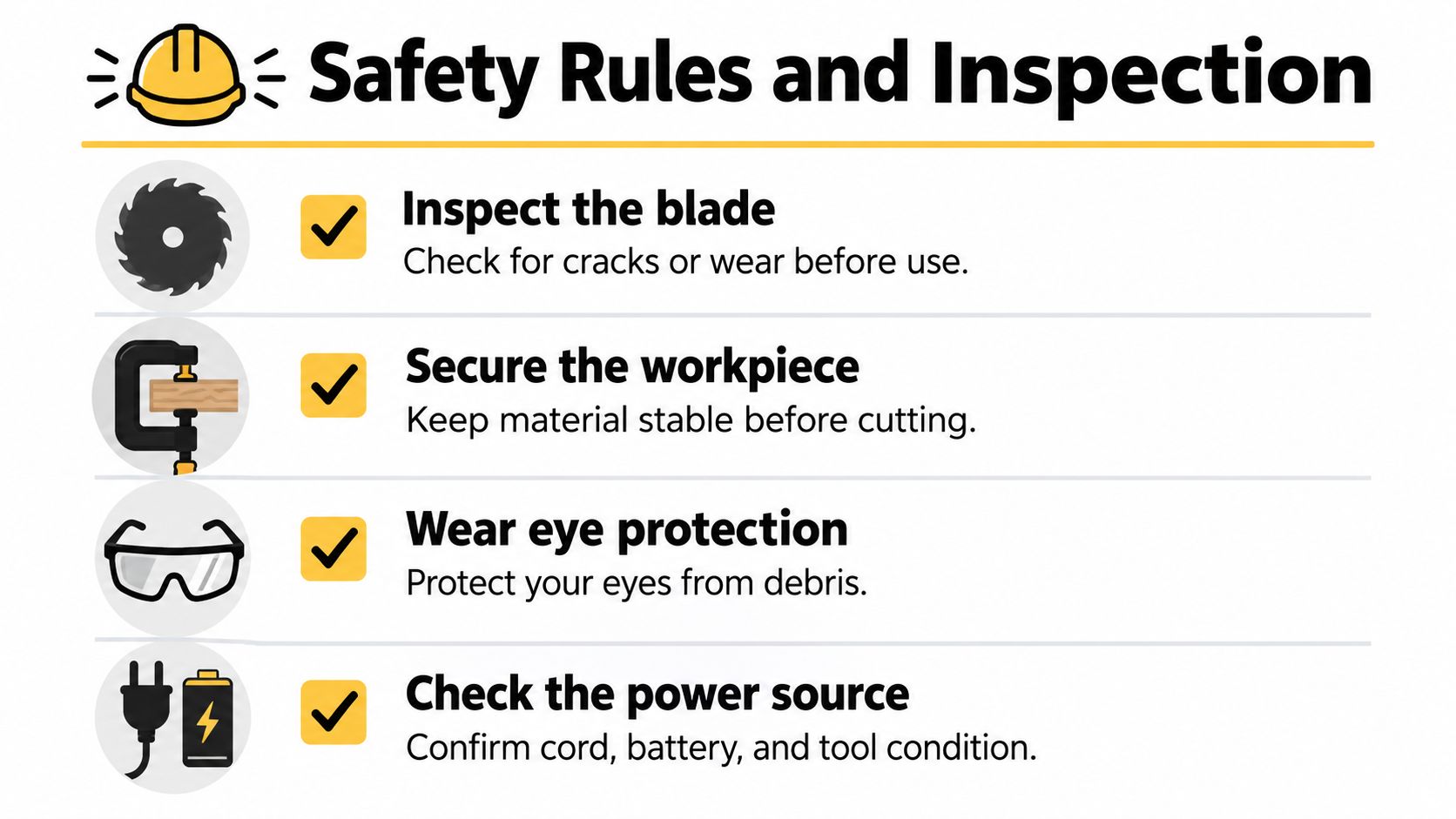
Corded models add shock and grounding duties. OSHA guidance in that same publication requires electric tools to use a three-wire cord with a grounding connection, be double-insulated, or run on a low-voltage isolation system, with GFCI protection or an assured grounding program for construction use. Route the lead behind you, clear of the blade and the workpiece, and never carry the saw by its cord.
Hidden Material Changes the Safety Math
Recip saws earn their living on blind cuts in walls, floors, and ceilings, where wiring, plumbing, gas lines, and fasteners hide. BuildToolHQ's reciprocating saw comparison guidance reflects manufacturer warnings that these tools create dust and noise exposures requiring respiratory and hearing protection, and that explosive atmospheres involving flammable liquids, gases, or dust must be avoided. Inspect the cut path for concealed electrical wiring, gas piping, and water piping before any plunge or blind cut, and de-energize what you can.
Cordless removes the extension cord shock path and the snag that can pull you off balance overhead. It also tempts operators into worse footing, reaching from ladders or kneeling in crawlspaces because the tool can go anywhere. Blade binding, kickback, and dropped-tool hazards don't care what powers the motor. Keep two hands on the saw, plant the shoe against the work, and let the blade reach speed before contact.
For an open-box or lightly used purchase, inspection is the whole game. Verify the trigger returns correctly, the shoe adjusts and locks, the blade clamp holds without play, and the housing shows no cracks. On corded units, flex the cord at the strain relief and check the plug prongs. On cordless units, check battery contacts, pack housing, and charger condition. These checks line up with the broader habits in this set of power tool safety tips for shop and jobsite.
Who This Is For and Who Should Avoid Each Format
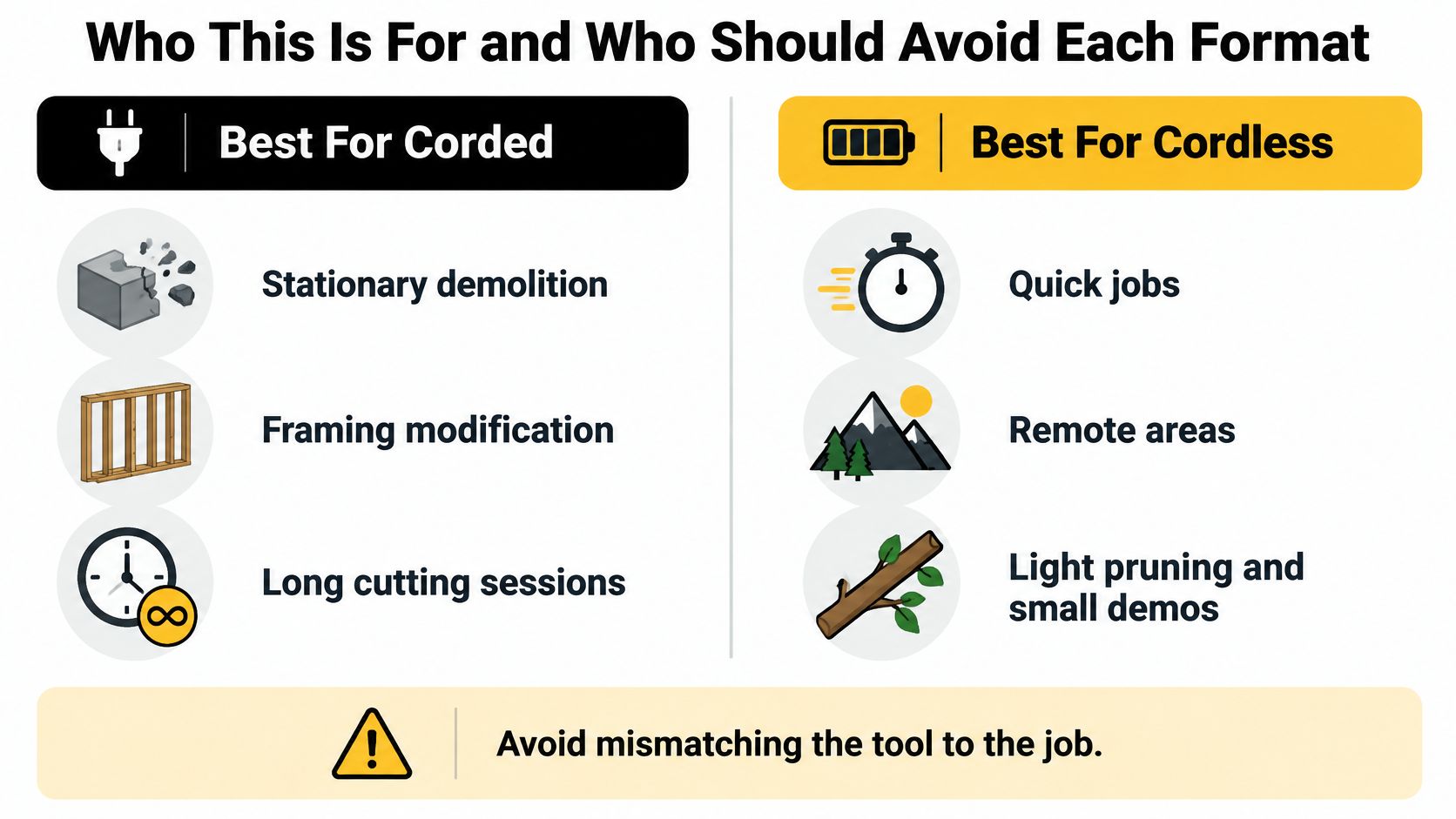
Who This Is For comes down to honest self-assessment. Corded suits shop-based remodelers, demolition contractors, and framing crews making repeated heavy cuts near reliable power. Cordless suits property managers, roofers, service technicians, and homeowners whose cuts happen outdoors, overhead, or spread across multiple locations.
The chart below maps common tasks to the format that handles them with fewer interruptions.
Pros and Cons in Plain Terms
- Corded pros: Continuous runtime, steady output, no pack investment, strong value for stationary work.
- Corded cons: Outlet dependence, cord routing and trip hazards, poor fit for roofs and remote sites.
- Cordless pros: Fast setup, full mobility, no extension lead, easy punch-list and exterior work.
- Cordless cons: Pack and charger costs, runtime limits, heavier in hand with large batteries.
Who Should Avoid This is equally specific. Avoid corded if your work regularly happens away from outlets, on ladders, or across unfinished structures where a lead becomes the limiting factor. Avoid cordless if you won't maintain a battery platform, if you cut dense material all day in one spot, or if a bare tool purchase would strand you without compatible packs. A cheap herramienta sola that matches nothing you own is the most expensive saw in this article.
For Northern California buyers weighing open-box options, Value Tools Co sells tested and inspected open-box and bare tools from brands including DeWalt, Makita, Milwaukee, Ridgid, Ryobi, and Husky, with savings of up to 55% off typical retail and a 30-Day Peace of Mind Guarantee covering 30-day returns by mail or in-store and free return shipping on defective items. Local Elk Grove pickup matters when a saw dies mid-remodel and the crew is standing around. Whatever the source, apply the same trigger, shoe, clamp, and pack inspection before the tool goes into production.
Frequently Asked Questions About Reciprocating Saw Power Sources
Can a Cordless Recip Saw Replace a Corded One for Demolition
For intermittent demolition, yes, provided you own enough packs to rotate without stopping. For all-day cutting at a fixed location near protected power, a corded saw removes pack management entirely and holds output steady. The deciding factor is duty cycle, not brand.
How Many Cuts Will One Battery Deliver
There's no honest single number. Material, blade condition, cutting speed, and pack capacity all change the result, so test with your own blade in your own typical stock. Treat any universal cuts-per-charge claim as marketing.
Is a Bare Tool Worth Buying
Only when you already own compatible batteries and a charger, the same logic crews apply to an impact driver / atornillador de impacto or any other platform tool. Without packs on hand, price the complete kit instead. A bare tool that forces a new platform rarely saves money.
What Should I Check on an Open-Box Saw
Test the trigger return, shoe lock, and blade clamp. Inspect the cord and plug on corded units, and the pack contacts, battery housing, and charger on cordless units. Confirm included accessories before you pay, then choose based on the platform you own and the jobs you run.
If your next reciprocating saw needs to earn its place on a demolition crew, a maintenance route, or a weekend project list, compare tested open-box and bare-tool options side by side before you commit to a platform. Value Tools Co stocks corded and cordless models from the major pro brands with Elk Grove pickup for Sacramento-area buyers, so you can match the saw to your work pattern and get cutting the same day.


