

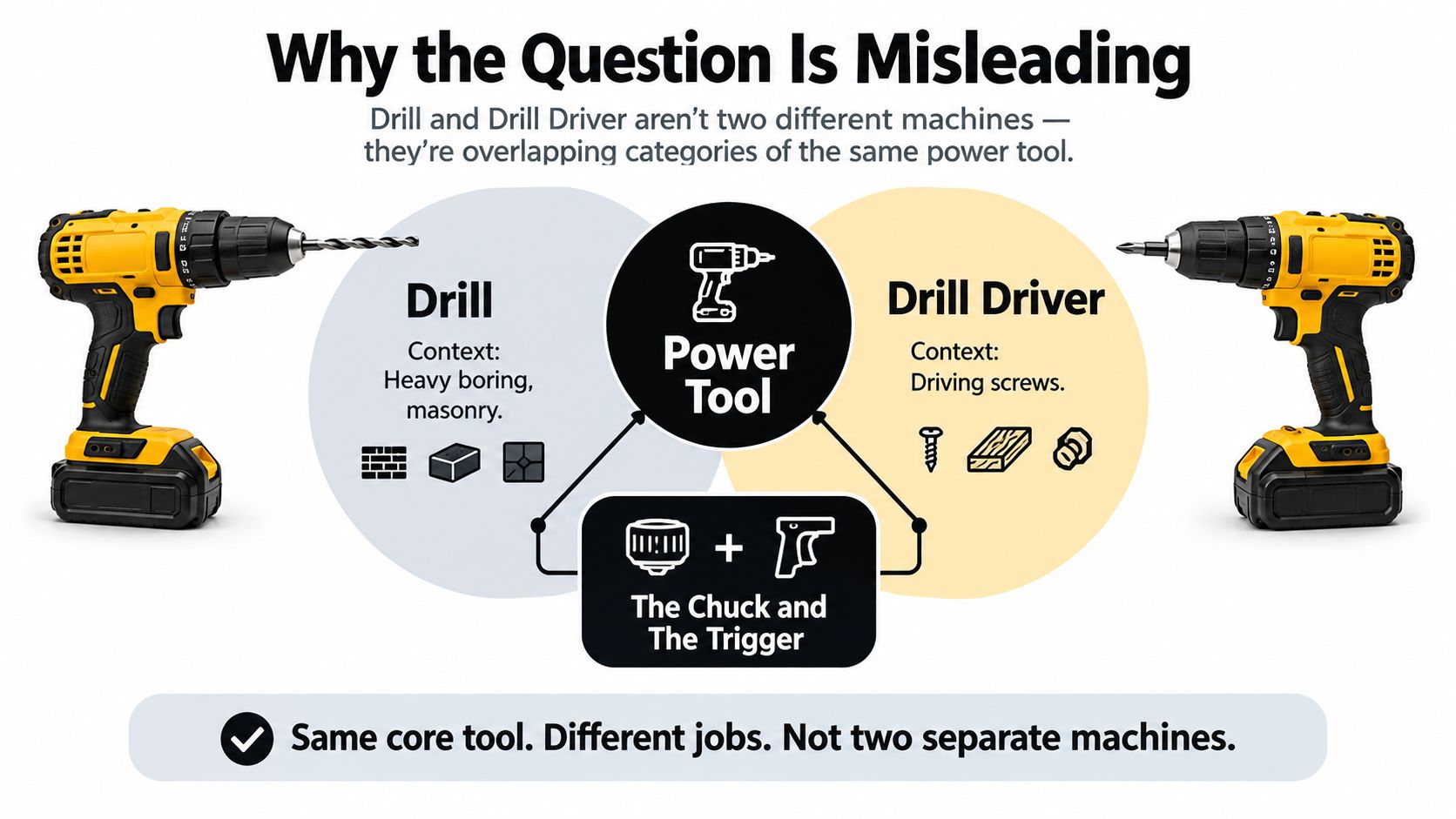
Most advice about the difference between a drill and a drill driver starts from the wrong assumption. They're usually not two separate machines. A drill driver is generally a drill with a clutch and a screw-driving mode, so the buying decision comes down to the chuck, clutch, gearbox, trigger, battery platform, and the work you perform.
A plain drill can make holes and drive screws, but it gives you less control when the fastener seats. A drill driver handles both jobs with better repeatability, especially on cabinet hardware, drywall, trim, furniture, and ordinary construction screws. If you're shopping open-box or for a bare tool, herramienta sola, inspect the working parts instead of trusting the title on the listing.
Why the Drill vs Drill Driver Question Is Misleading
A “drill” and a “drill driver” are often naming differences applied to the same basic rotary tool. Both normally use a motor, gearbox, trigger, and chuck. The drill driver adds the features that make screw installation controlled, mainly an adjustable clutch and a dedicated driver setting.
The historical starting point is the portable electric drill patented by S. Duncan Black and Alonzo G. Decker in 1917. The National Inventors Hall of Fame history of Alonzo Decker identifies that design as the ancestor of today's electric drills, with the pistol grip and trigger switch that still define modern cordless drill platforms. Manufacturing of that design had begun in 1916, before the patent milestone.
The label matters less than the hardware
A product page can call a tool a drill, cordless drill, drill/driver, or compact driver drill. None of those names tells you enough by itself. You need to confirm whether it has:
- An adjustable clutch, which limits torque during screwdriving.
- A keyless chuck, preferably one that tightens smoothly and holds bits without slipping.
- Variable-speed control, so you can start a screw slowly and avoid damaging the material.
- Forward and reverse, which is essential for driving and removing fasteners.
- A two-speed gearbox, giving you a low range for controlled torque and a high range for faster drilling.
The clutch is the practical dividing line. It lets you select a resistance threshold, then slips before the screw strips, snaps, or sinks too far into a soft surface. That's why a drill driver is usually the better first tool for a homeowner, maintenance worker, installer, or small remodeling crew.
Jobsite rule: Don't buy the word “drill.” Buy the chuck, clutch, gearbox, battery compatibility, and condition you can verify.
What Is Inside a Drill and a Drill Driver
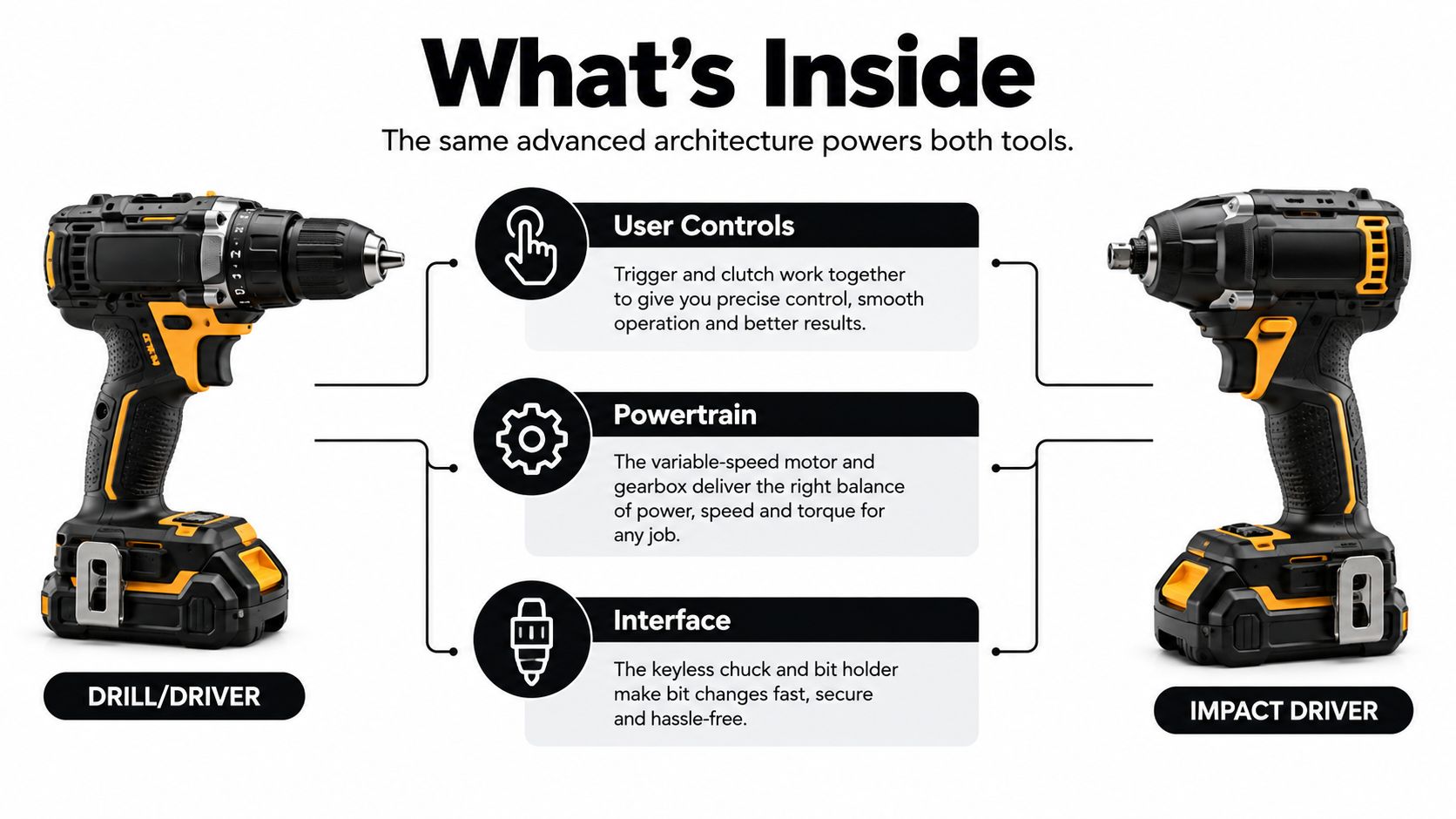
Inside both tools, the basic powertrain is familiar: a variable-speed motor, a gearbox, and a chuck. Pull the trigger lightly and the motor turns slowly. Pull harder and the speed rises. The gearbox changes the relationship between speed and rotational force, while the chuck holds a round-shank bit.
A typical cordless drill driver uses a two-speed gearbox. Low gear runs approximately 0 to 450 or 500 RPM, while high gear runs roughly 0 to 1,500 or 2,000 RPM. Published torque ranges span about 200 to 600 lb-in, depending on the model, and the clutch disengages when resistance reaches the selected threshold, as described in this overview of drill types and operating ranges.
The clutch controls the finish
The numbered collar behind the chuck is the mechanical clutch. Set it low for small cabinet screws or drywall fasteners, then raise it only until the screw seats correctly. The clutch slips when the selected resistance is reached, which reduces stripped heads, overdriven screws, and damage to softer wood or plastic.
Turn the collar to the drill icon for hole-making. That setting bypasses the clutch, allowing the tool to transmit continuous rotary force instead of stopping at a screw-driving threshold. This is the feature that makes a drill driver useful across both drilling and fastening. A practical explanation of this feature appears in Value Tools Co's guide to drills with a clutch.
The chuck and motor determine compatibility
A three-jaw keyless chuck accepts a broad range of round-shank drill bits and driver accessories. That makes a drill driver more flexible than an impact driver, which normally uses a 1/4-inch hex collet designed for hex bits.
Brushless, or sin escobillas, motors can improve efficiency and reduce brush wear, but the motor label doesn't replace a condition check. On a used tool, the trigger should ramp smoothly at low speed, the chuck should tighten evenly, and the clutch should change behavior as you move through its settings. A worn clutch collar can make a tool look healthy while defeating the main reason to buy a drill driver.
Side-by-Side Comparison of Drill vs Drill Driver
The plain drill and drill driver share the same fundamental rotary action. The drill driver earns its name through controlled fastening, not through a completely different motor or chuck design.
| Feature | Plain Drill | Drill Driver |
|---|---|---|
| Core function | Rotary drilling and basic fastening | Rotary drilling and controlled screwdriving |
| Clutch | Often absent | Adjustable mechanical clutch |
| Chuck | Commonly a three-jaw chuck | Three-jaw keyless chuck is common |
| Speed control | Variable trigger may be included | Variable trigger and forward/reverse are typical |
| Gearbox | May use one or two ranges | Two-speed gearbox is common |
| Best fastening use | Occasional or rough fastening | Cabinetry, drywall, trim, furniture, electrical work |
| Best drilling use | Sustained hole-making where direct drive helps | General-purpose drilling with clutch bypassed in drill mode |
| Main advantage | Simple drive path and direct rotary output | Repeatable fastening and broader everyday versatility |
| Main drawback | More operator control is required | Less suitable than an impact driver for large structural screws |
| Ideal user | Someone focused on drilling or low-cost basic work | DIY users, installers, maintenance workers, and contractors |
A representative matched compact cordless comparison makes the tool-interface difference clear. The drill driver uses a 1/2-inch chuck, an adjustable clutch, and approximately 550 inch-pounds of torque. The paired impact driver uses a 1/4-inch hex collet and is rated at approximately 1,700 inch-pounds, or about 3.1 times as much torque, according to this compact impact-driver and drill-driver comparison.
That comparison doesn't make the impact driver the better tool for every job. Its hex interface is excellent for repeated high-resistance fastening, but it won't accept the same broad range of round-shank drill bits. The drill driver's chuck and clutch make it the more useful single-tool choice for mixed drilling and finish fastening.
The number on a torque chart matters less than whether the tool delivers the right control for the fastener in your hand.
When Each Tool Actually Wins on the Jobsite
A drill driver wins whenever screw depth and surface condition matter. Cabinet hinges, drawer hardware, electrical boxes, trim, furniture assembly, and drywall fasteners all benefit from low-to-medium clutch settings. Start low, drive the screw until it seats, and increase the setting only if the tool stops before the fastener reaches the correct depth.
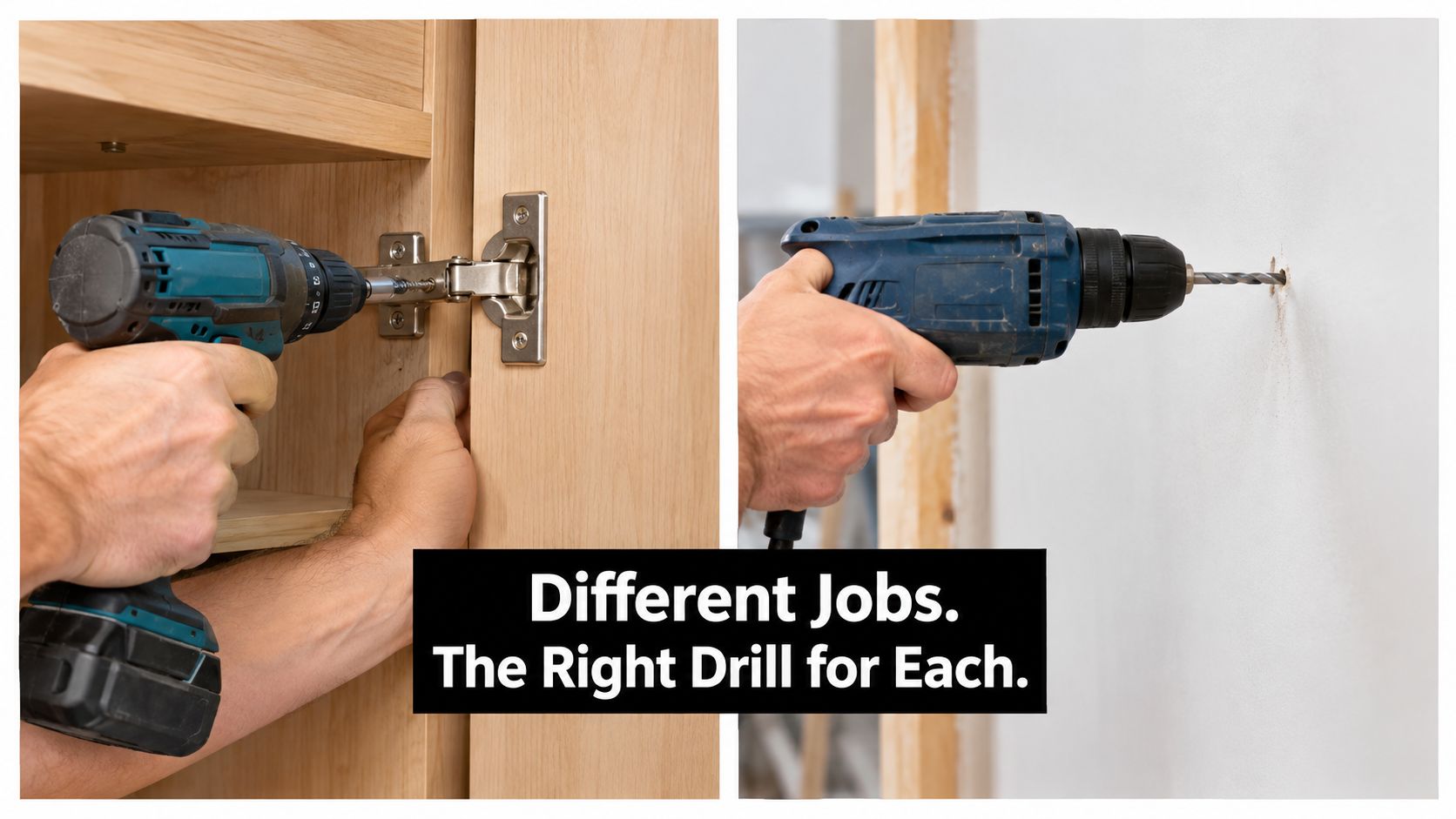
For pilot holes in hardwood, use a sharp bit, firm alignment, and a controlled feed. Small wood bits and light metal drilling can use high gear when speed helps, but larger bits and metal generally need slower operation so the bit doesn't overheat. A drill driver's clutch is built for controlled fastening, not maximum continuous drilling torque, and available torque falls as speed rises in high gear, as explained in this speed and torque guide for drills and impact drivers.
Match the task to the tool
- Cabinet hardware: Use a drill driver in low gear with a low clutch setting. A plain drill can work, but it's easier to strip a small screw or crush a finished surface.
- Drywall and trim: Use a drill driver with controlled trigger pressure and a conservative clutch setting. The goal is a seated fastener, not maximum torque.
- Pilot holes: Use the drill mode with a sharp bit. Choose low gear for larger holes or harder material, and high gear for smaller bits when heat and control remain manageable.
- Metal fabrication: A plain drill can be useful for sustained hole-making, but alignment, sharp bits, cutting fluid where appropriate, and reduced speed matter more than a headline torque figure.
- Long structural screws: An impact driver is usually the better companion tool. Its hammering action delivers higher fastening output and reduces sustained reaction force at the wrist, while the drill driver provides better clutch control for smaller fasteners.
- Masonry: A conventional drill or drill driver without hammer action is generally the wrong choice for repeated brick or concrete drilling. Use the appropriate hammer drill or rotary hammer, bit, and dust controls.
A drill and drill driver also have no place in structural framing nailing when the plans call for a dedicated framing nailer, or clavadora de marcos. California crews should confirm the project requirements and use the specified fasteners, including 21-degree full round-head framing nails where that configuration is required for the work. For silica-producing masonry or concrete tasks, use appropriate controls and review this guide to silica exposure for civil crews.
For a deeper cordless-versus-corded decision, see this cordless drill versus corded drill guide.
Central Valley Heat, Batteries, and Open-Box Buying Reality
In Sacramento, Elk Grove, and across California's Central Valley, a cordless tool can sit in a work truck through a 100°F-plus summer day. The pack may already be hot from drilling or repeated fastening, and putting it straight on the charger adds another avoidable stress point.
Makita's lithium-ion battery safety documentation warns that exposure above 130°C, or 266°F, can cause fire, explosion, or injury. Milwaukee's drill/driver instructions also warn that charging outside the specified temperature range can damage the battery and increase fire risk, as documented in this Makita lithium-ion battery safety documentation_Makita%20EN.pdf). Those limits aren't a target operating temperature. Shade hot packs, let them cool, and use manufacturer-approved chargers.
Battery logistics are part of the tool choice
Contractors should consider spare-pack rotation, charger access, platform compatibility, and local replacement availability. A smooth drill driver may be easier to manage for general work, while an impact driver's repeated hammering can create more vibration and demanding high-load cycles during large fastening.
The same logic applies to other battery equipment. This battery snow blower buying guide also treats battery capacity, storage, charging, and temperature management as practical ownership concerns rather than side notes.
For an open-box or bare tool, herramienta sola, inspect the actual tool before you count the discount as a saving:
- Clutch collar: Turn through several settings and verify that resistance changes.
- Chuck: Tighten a bit and check for slipping, roughness, or visible runout.
- Gearbox: Test low and high ranges under light load.
- Trigger: Confirm smooth low-speed control rather than an abrupt start.
- Reverse switch: Check positive engagement without excessive looseness.
- Battery interface: Look for damaged terminals and confirm platform compatibility.
Value Tools Co's open-box tool explanation is useful when comparing condition, packaging, and expected value. Sacramento-area buyers who need a working tool quickly may also value same-day Elk Grove warehouse pickup or 1-day Northern California delivery, provided the specific item is available.
Pros, Cons, and Ideal Users for Each Tool
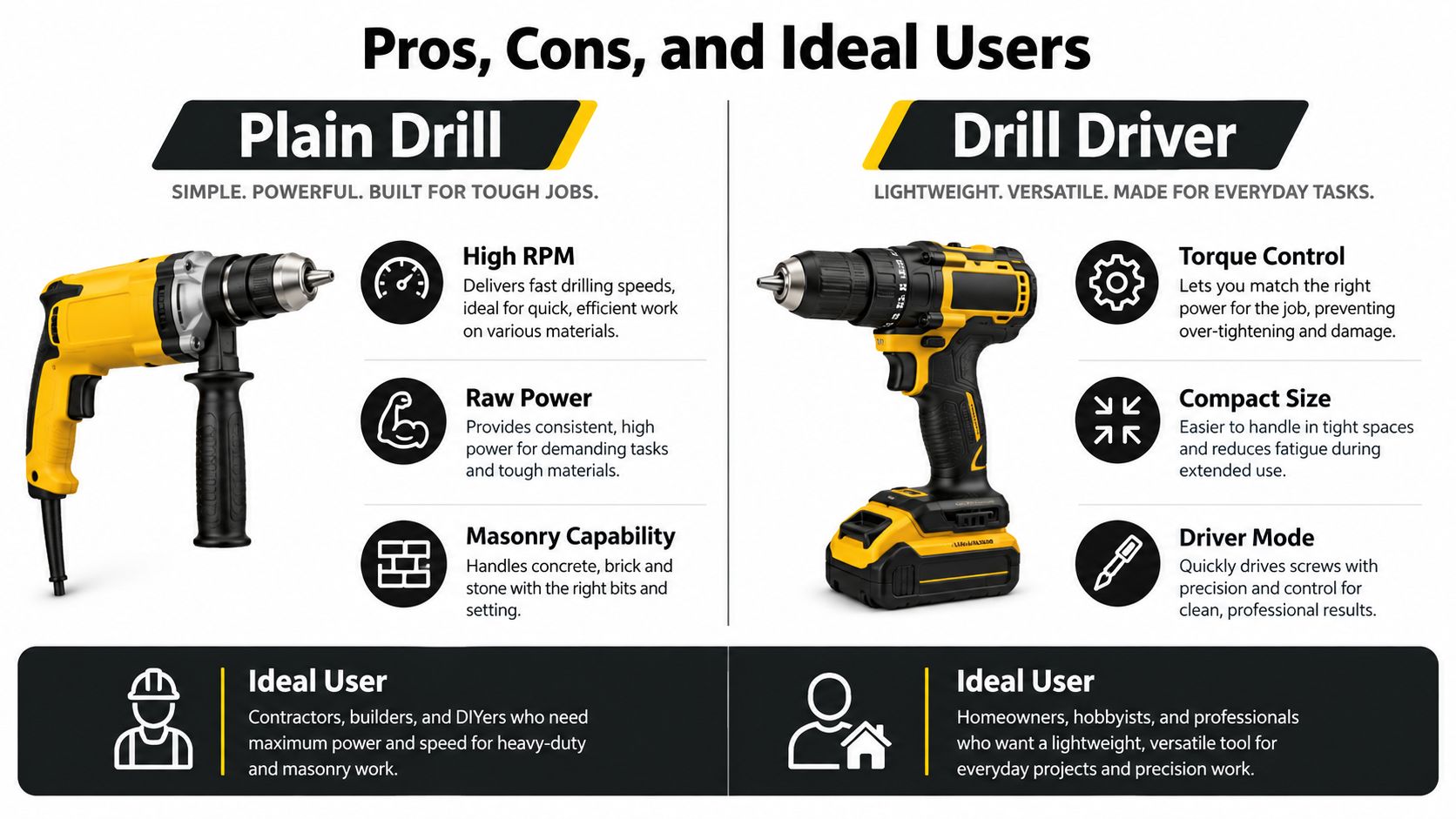
A plain drill isn't automatically inferior. It can be the right choice when the work is mostly hole-making and you want a straightforward drive path. The drill driver is more useful for mixed tasks, but its added clutch and mechanism give you more parts to evaluate on a used tool.
Plain drill
Pros
- Direct drilling: A simple drive path can suit sustained hole-making where uninterrupted rotary output matters.
- Lower entry cost: Plain bare-tool listings may cost less when you already own a compatible battery platform.
- Simple operation: Fewer controls can be useful for someone who mainly drills holes and rarely installs small screws.
- Broad bit use: A three-jaw chuck can accept ordinary round-shank drill bits and accessories.
Cons
- No automatic torque limit: You must release the trigger at the right moment or risk stripping a fastener.
- Less finish-work control: It's easier to overdrive screws into drywall, trim, softwood, or cabinet material.
- Operator dependence: Consistent results require careful trigger control and feel.
- Not a masonry solution by default: Without hammer action, it isn't the proper choice for repeated brick or concrete drilling.
Ideal user: A weekend DIY homeowner focused on drilling, a maintenance worker who needs direct rotary action, or a buyer seeking a low-cost tool for occasional basic work.
Drill driver
The standard drill/driver uses a three-jaw chuck and adjustable mechanical clutch behind the chuck. Its advantages are precise fastening, compatibility with round-shank bits, and versatility. Its drawbacks are lower fastening force than an impact driver and slower performance with large structural screws, as detailed in this drill-driver test and explanation.
Pros
- Controlled fastening: The clutch helps prevent stripped heads and overdriven screws.
- Two-purpose capability: Drill holes in drill mode, then install fasteners without changing tools.
- Better finish work: Useful for cabinetry, trim, furniture, electrical boxes, and smaller construction screws.
- Familiar platform: A practical choice for crews using English and Spanish trade terminology, including clutch, chuck, driver mode, and sin escobillas.
Cons
- Not an impact driver: It won't match an impact driver's output for repeated long or high-resistance fasteners.
- More parts to inspect: A used unit needs checks across the clutch, chuck, gearbox, trigger, and switch.
- Clutch misuse: Leaving the collar in a low screw-driving setting while drilling can cause premature stopping and frustration.
- Masonry limitations: A standard drill driver without hammer action isn't a substitute for a hammer drill.
Ideal user: A homeowner buying one general-purpose cordless tool, a finish carpenter, installer, property-maintenance handyperson, or small remodeling crew.
Who Should Buy Which Tool and Who Should Skip Both
Choose the tool by workload, not by the word printed on the case. Occasional household repairs and furniture assembly favor a drill driver because one tool handles pilot holes and controlled screw installation. Cabinet and trim installers should prioritize a working clutch and smooth trigger over maximum torque.
Repetitive framing fasteners usually justify an impact driver, while structural nailing calls for a framing nailer and the correct fastener specification. Metal fabricators may prefer a plain drill for sustained hole-making, but a drill driver remains useful when the same shift includes ordinary screw installation. Masonry work generally calls for a hammer drill or rotary hammer, not a conventional drill driver.
Buyer fit by job
| Buyer or task | Recommended choice | Reason |
|---|---|---|
| Occasional home repairs | Drill driver | Handles holes and controlled fastening |
| Cabinet and trim installation | Drill driver | Clutch protects small fasteners and finished surfaces |
| Repetitive long screws | Impact driver plus drill driver | Higher fastening output and separate drilling setup |
| Structural framing | Dedicated framing nailer and appropriate fasteners | Faster, more consistent, and aligned with project requirements |
| Metal fabrication | Plain drill or drill driver in the correct gear | Selection depends on hole-making workload and fastening needs |
| Brick or concrete | Hammer drill or rotary hammer | Hammer action is needed for repeated masonry drilling |
| All-day professional work | Platform-based cordless system with spare batteries | Runtime, charging, service, and compatibility affect productivity |
A 2025 industry report found that 72% of surveyed construction professionals who had switched to battery-powered tools said projects could be completed two to three times faster, while power supply and durability remained concerns for 39% and 35%, respectively, according to this battery-tool buying guidance from Lowe's. Those figures aren't specific to drill drivers, but they support a practical point: battery platform, runtime, charging access, durability, and backup packs can matter more to a contractor than nominal tool type.
Value Tools Co sells tested and inspected open-box and bare-tool options, with savings of up to 55% on those categories. Its 30-Day Peace of Mind Guarantee includes 30-day returns by mail or in-store and free return shipping on defective items. That makes a verified open-box drill driver worth considering when you already own the battery platform and can inspect the clutch, chuck, gearbox, trigger, and battery interface.
Who This Is For
- Budget-conscious contractors who need a working tool without paying full retail pricing.
- DIY homeowners moving beyond a single old cordless drill.
- Property managers and maintenance crews who need controlled fastening and local support.
- Small remodeling businesses that can standardize batteries across several tools.
- Sacramento and Elk Grove buyers who benefit from local pickup or fast Northern California delivery.
Who Should Avoid This
Skip a conventional drill driver if your main task is repeated masonry drilling, because you need hammer action. Skip a small platform if you plan to run large, high-resistance fasteners all day and don't have a suitable impact driver or larger battery system. Also skip any open-box unit that fails a clutch test, has visible chuck runout, lacks a compatible charger or battery plan, or shows signs of overheating.
Frequently Asked Questions About Drills and Drill Drivers
Can a drill driver replace a regular drill for home use?
Yes. A modern cordless tool marketed as a drill/driver generally drills with standard bits and drives screws through an adjustable clutch. Confirm that the specific model has a clutch, variable speed, forward/reverse control, and a chuck compatible with your existing bits, as outlined in this drill versus drill driver buying explanation.
When is an impact driver the better purchase?
Choose an impact driver for repeated long screws, lag fasteners, and other high-resistance fastening where a drill driver's clutch and smooth rotary action become limiting. Keep a drill driver for drilling, smaller screws, delicate materials, and any work requiring repeatable depth.
Can a cordless drill driver drill masonry or concrete?
A conventional drill driver without hammer action isn't the right tool for repeated brick or concrete drilling. Use a hammer drill or rotary hammer with the correct masonry bit, and follow appropriate dust and exposure controls.
What should I inspect on an open-box bare tool?
Test the clutch across multiple settings, run both gearbox ranges, check chuck operation and runout, confirm smooth trigger control, test forward and reverse, and verify battery-platform compatibility. A low price isn't useful if the clutch slips inconsistently or the battery system doesn't match your existing herramienta sola purchase.
Is a drill driver or plain drill better for one-tool ownership?
A drill driver is usually the better first tool because it covers general drilling and controlled screw installation. Choose a plain drill only when your work is primarily sustained hole-making and you're comfortable managing fastening torque without a clutch.
Value Tools Co offers tested and inspected open-box and bare-tool drill drivers, with up to 55% savings, local Elk Grove pickup, and fast Northern California delivery when available. Choose a clutch-equipped model for mixed drilling and fastening, then visit Value Tools Co to compare the tool condition, battery platform, return coverage, and the 30-Day Peace of Mind Guarantee before you buy.


