

A premium chisel can still need sharpening before its first cut. Narex Richter is my best all-around value recommendation, Veritas PM-V11 is the premium choice for edge retention, and IRWIN Marples is the budget pick for jobsite work. Paying more mainly buys better preparation, useful blade geometry, and potentially less time at the sharpening station, not permission to abuse the edge.
The best wood chisels match the work. A bench chisel is a general-purpose woodworking chisel for trimming, chopping, and fitting joints. A socket chisel describes the handle connection, with the handle seated inside a steel socket. These categories overlap, and neither replaces a dedicated mortise chisel for demanding excavation.
Before buying, check:
- Steel and hardness: Compare heat treatment and intended use, not just alloy names.
- Grind and back: Distinguish lapped-flat preparation from a tool that still needs substantial honing.
- Handle: Choose comfortable control and construction appropriate for mallet work.
- Configuration: Buy widths that fit your joinery, especially when strengthening mortise and tenon connections.
Sacramento-area buyers can also compare available tools locally in Elk Grove or order online rather than choosing from specifications alone.
1. Narex Richter Bevel-Edge Chisels
Best for dedicated joinery without stepping into the highest price tier. Narex Richter makes sense when dovetails, fitted cabinet parts, and clean shoulder lines matter more than having a disposable toolbox set.
The Narex Richter range uses cryogenically treated Chrome-Vanadium steel rated to at least 62 HRC, and the featured set includes ¼", ⅜", ½", ¾", and 1" widths. European ash handles, stainless-steel ferrules, thin blade sides, and ground-flat backs make this a joinery-focused package rather than a rough demolition kit.
Where the preparation earns its keep
Thin sides help reach dovetail corners without bruising adjacent wood. Ground-flat backs reduce the preparation burden, although you should still inspect the blade and hone it to suit your work. Don't confuse a prepared back with an edge that never needs attention.
- Pros: Useful everyday widths, access into tight joints, and less initial back-flattening work.
- Cons: Higher entry cost than basic sets, limited retailer review coverage, and no extra-narrow detail chisels.
- Ideal user: A furniture maker, serious hobbyist, or finish carpenter building a dedicated bench-tool kit.
The ash handles deserve a grip check if possible. A comfortable handle should let you steer a paring cut without squeezing hard enough to tire your hand.
Buying rule: Pay for useful geometry before paying for more chisels in the box.
Choose Richter over WoodRiver when reduced setup work and tight-joint access justify the extra spend. Choose Veritas instead when frequent sharpening interruptions are your main concern. Our beginner woodworking tool guide helps put that purchase in context with workholding and sharpening equipment.
2. WoodRiver 6-Piece Bench Chisel Set
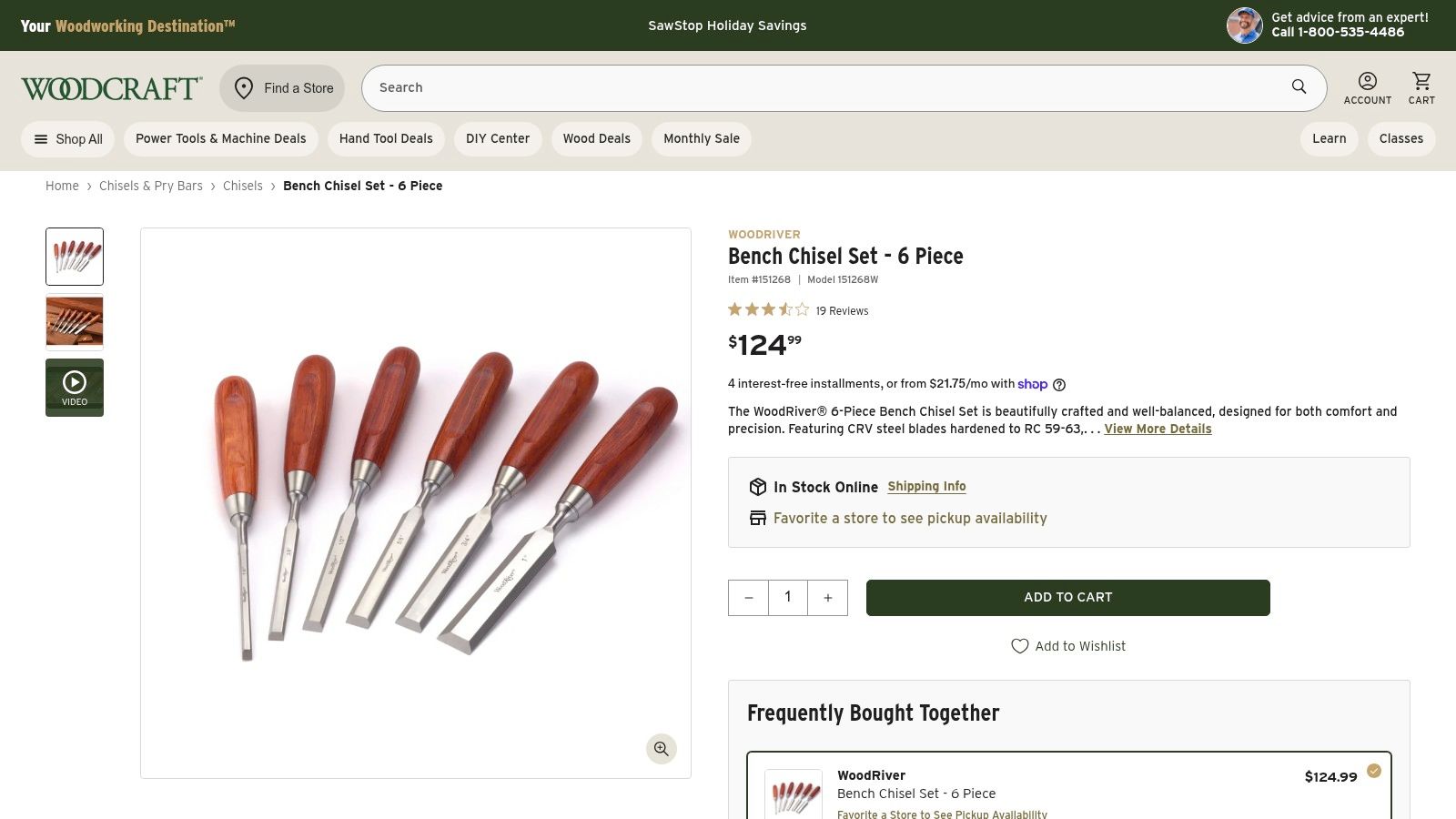
WoodRiver's six-piece set covers common bench work at a lower price than premium sets, with a trade-off: expect to hone the chisels before cutting. That makes it a practical fit for DIY builders of shelves, cabinet doors, or small furniture who are willing to spend time at the sharpening station.
The Woodcraft WoodRiver listing specifies CR-V blades hardened to RC 59–63, six widths from ¼" through 1", including ⅝", hardwood handles, steel ferrules, and a wooden storage box. The listing shows a price of $124.99 and 19 customer reviews.
Budget for honing, not just the box
Before using the chisels, check the backs on your sharpening surface and hone the edges. Their setup takes more work than tools supplied with prepared backs, so factor that time into the purchase. For bench work, that preparation can matter more than having another width in the set.
Try a cabinet hinge recess first. A properly honed chisel should pare the bottom cleanly with controlled hand pressure, rather than needing a hard push that risks crossing your layout line.
- Pros: Useful size coverage, lower cost than premium sets, and a protective storage box.
- Cons: Requires initial honing, needs more preparation than a lapped tool, and lacks extra-narrow detail widths.
- Ideal user: A DIY woodworker who wants a practical bench set and is ready to learn sharpening.
Compared with Richter, WoodRiver requires more setup before use. Compared with IRWIN, it offers a bench-focused set with storage rather than a bare-bones secondary kit.
Keep the wooden handles dry and check the ferrules before mallet work. Choose WoodRiver if you're comfortable preparing the edges yourself; choose a set with less setup required if you need to start cutting sooner.
3. Veritas PM-V11 Bench Chisels
PM-V11 suits bench work where repeated sharpening would interrupt the job. For trimming end grain or fitting hardwood joints, its long-wearing edge is the main draw; the trade-off is a premium price and the need to hone before demanding cuts.
Lee Valley specifies PM-V11 steel hardened to RC 61–63, lapped-flat backs, torrefied maple handles, and stainless-steel ferrules. The chisels are available individually and in five- and seven-piece sets. Lee Valley says the edge typically lasts at least twice as long as an A2 blade, a manufacturer claim rather than an independent comparison.
Buy the widths that do the work
Choose individual widths around the joinery you make. For routed housings, machine away the bulk, then use a sharp chisel to clean corners and fit the joint. Our router-table guide covers that workflow. Keep the chisel cutting; prying trapped waste can damage the edge.
- Pros: Flat reference backs, flexible purchasing, and steel designed for extended edge life.
- Cons: Premium cost, honing still recommended, and narrow blades demand controlled handling.
- Ideal user: A furniture builder or cabinetmaker with sharpening equipment who values fewer interruptions for edge maintenance.
Handle comfort is personal. Check that you can guide the blade with the handle resting naturally in your palm.
Choose Veritas over Richter when longer intervals between sharpening matter more than the initial outlay. Choose Lie-Nielsen if a replaceable socket handle is your priority. Either way, inspect the edge and avoid twisting the blade in a cut.
4. Lie-Nielsen Bevel-Edge Socket Chisels
A damaged handle doesn't have to retire a good blade. That's the practical attraction of Lie-Nielsen's socket construction, especially for woodworkers who alternate between hand paring and controlled mallet work.
Lie-Nielsen's chisel range follows the Stanley 750 pattern, using predominantly A2 steel, with O1 in some sizes, hardened to RC 60–62, cryogenically treated, and double tempered. Replaceable maple handles fit into steel sockets, and the maker describes the blades as hand-finished with flat backs.
Socket construction isn't permission to hit harder
A socket provides a replaceable handle connection. It doesn't make the blade immune to twisting, excessive force, or contact with hidden fasteners.
Use the mallet to advance the cut, not to compensate for a dull edge.
The narrow sides help with tight joinery, while individual availability lets you build a set around actual projects. Additional honing is recommended, so inspect the back and blade before putting a new tool into demanding work.
- Pros: Replaceable handles, fine-joint access, and the option to buy individual widths.
- Cons: High cost per tool, variable availability, and additional edge preparation.
- Ideal user: A traditional hand-tool woodworker who values repairable handles and controlled mallet use.
Compared with Stanley Sweetheart, Lie-Nielsen is the premium socket route. Compared with Veritas, the main buying distinction is handle architecture rather than a reason to declare either tool universally better.
The maker cautions against metal-hammer strikes. Use a suitable wooden or plastic mallet, inspect handle seating before work, and stop if anything feels loose. Buy these for careful, sustained woodworking, not for extracting nails or levering apart site-built assemblies.
5. Blue Spruce Toolworks Bench Chisels
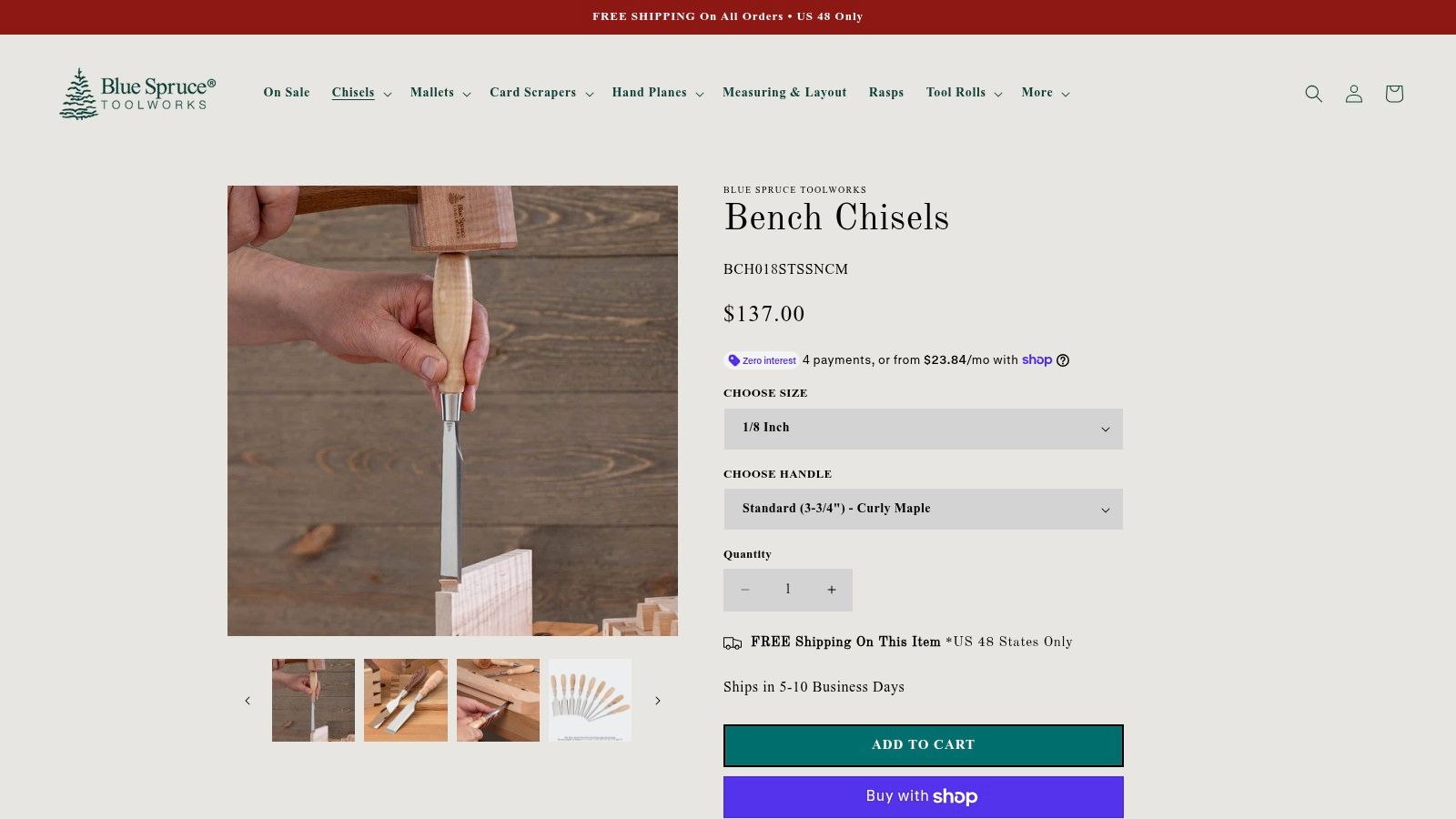
Blue Spruce is the preparation-first premium choice. The attraction is not just an attractive handle. It's the maker's stated surface grinding, lapping, polishing, and sharpening process.
Blue Spruce Toolworks specifies A2 blades at RC 60–62, cryogenically treated and double tempered, with resin-infused curly maple or Bolivian rosewood handle options and individual, four-, six-, and nine-piece configurations. These are American-made tools aimed at buyers who want carefully prepared cutting surfaces and a choice of handle configuration.
When paying for preparation makes sense
Say you're building fitted drawers and need to pare end grain to a knife line. A well-prepared back gives you a useful reference surface, while a polished blade reduces the work needed before making that first controlled cut.
You still need sharpening equipment. Factory preparation saves initial work; it doesn't preserve the edge indefinitely.
- Pros: Extensive blade preparation, multiple handle choices, and direct maker support.
- Cons: Premium pricing, variable natural-wood appearance, and possible waits for particular configurations.
- Ideal user: A furniture maker who values initial preparation and wants to select handle feel and appearance.
Handle choice should start with grip, not grain figure. Check whether the shape supports both palm pressure and a relaxed guiding grip before paying extra for appearance.
Compared with Veritas, Blue Spruce puts more emphasis on preparation and handle options than on a specific extended-edge-life claim. Compared with Richter, you're spending further into the premium tier for those details.
For a working shop, that purchase makes sense only if the preparation matters to you. If you'll immediately reshape every bevel to your preferred geometry, a less expensive set may offer better value.
6. Stanley Sweetheart 750 Series Socket Chisels

Stanley Sweetheart is the accessible route into classic socket chisels. It suits the woodworker who wants replaceable handles without committing to premium individual-tool pricing.
The Stanley Sweetheart range includes a four-piece set with ¼", ½", ¾", and 1" chisels, a tool roll, and socket handles based on the 750 design. Those widths cover plenty of general fitting work, but detailed joinery may call for narrower additions.
Buy for the handle system
The socket construction is the reason to consider this set over an ordinary entry-level bench set. If a handle eventually needs replacement, the blade can remain in service with a properly fitted new handle.
That doesn't remove the need for initial honing. Check the back, sharpen the bevel, and make a test cut before using the chisel against a finished cabinet part.
- Pros: Practical everyday widths, replaceable-handle construction, and a compact storage roll.
- Cons: Limited narrow-width coverage, retailer-dependent availability, and preparation before precision work.
- Ideal user: A budget-conscious traditional woodworker who specifically prefers socket handles.
Against Lie-Nielsen, Stanley is the lower-cost socket proposition. Against WoodRiver, the choice is primarily socket construction versus broader set coverage.
Maintenance habit: Dry the blade before rolling it away. A tool roll protects an edge from knocks, not from moisture trapped against the steel.
Our hand-tool cleaning guide is useful for keeping blades, ferrules, and handles serviceable. For Central Valley garage shops, put that routine ahead of leaving tools loose on a bench between projects.
Buy Sweetheart when you want serviceable socket construction and don't mind doing the final edge work yourself.
7. IRWIN Marples Blue Chip Bevel-Edge Chisels
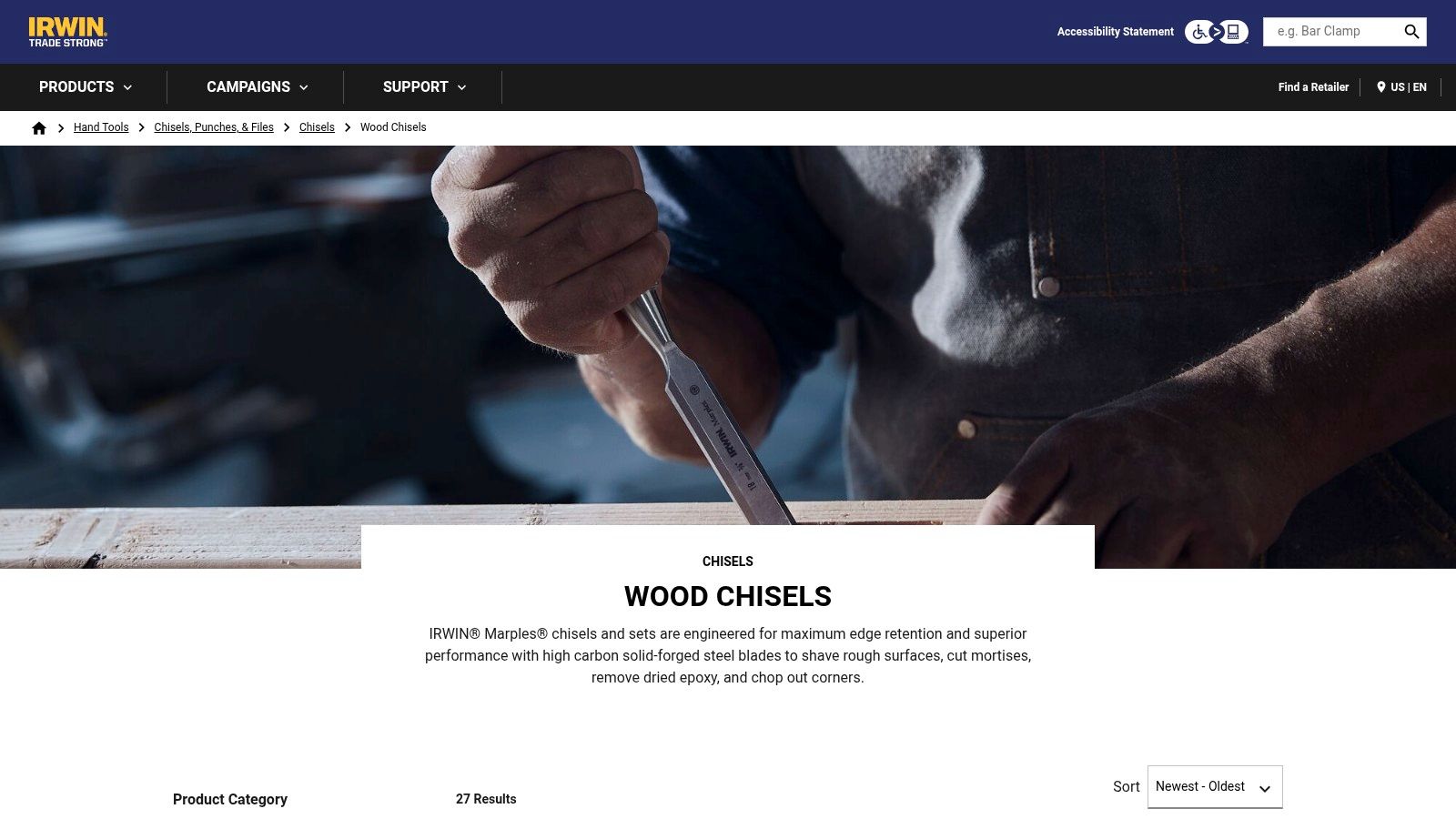
For hinge recesses, household repairs, and a secondary jobsite kit, IRWIN Marples is the budget recommendation. You don't need a presentation-grade woodworking set to square a routed corner in ordinary trim work.
The IRWIN wood-chisel range includes high-carbon-steel blades, individual sizes, and several set configurations. Check the exact model before ordering because Marples branding covers different product lines, and features shouldn't be transferred from one range to another.
Keep rough work separate from fine joinery
A lower purchase price makes this a sensible secondary set, not a sacrificial pry bar. Remove bulk waste with suitable tools, then use the chisel for controlled cutting.
Sharpen and hone before detailed joinery. Less refined fit and finish matters less when trimming concealed blocking than when paring a visible drawer joint, but a dull edge remains difficult to control in either job.
- Pros: Lower entry cost, broad retail availability, and useful everyday applications.
- Cons: More preparation for fine work, less refined finish, and model-specific differences.
- Ideal user: A homeowner, maintenance worker, property manager, or contractor keeping a separate rough-work kit.
Warranty language also needs a model check. IRWIN's limited lifetime warranty identified for the Marples high-impact set shouldn't automatically be assumed to cover a different Blue Chip purchase.
Compared with WoodRiver, IRWIN is the straightforward budget jobsite choice. Compared with Richter, it makes more sense as a secondary kit than as the first choice for frequent precision joinery.
Inspect discounted tools closely. The Canadian Centre for Occupational Health and Safety chisel guidance emphasizes sharp edges, sound handles, and repairing or replacing damaged tools. A bargain with a cracked handle isn't a good working-tool purchase.
Best Wood Chisels Compared
Setup time and job type matter more than brand prestige. Lapped backs reduce initial prep for fine bench work, while chisels that need more honing can make better value for rough jobsite cuts or mallet work. The comparison below groups the choices by steel, range, price tier, and intended use.
| Item | Blade Steel | Widths / Set Size | Price Tier | Best For |
|---|---|---|---|---|
| Narex Richter Bevel-Edge Chisels | Cryogenically treated Chrome-Vanadium, at least 62 HRC | Five widths: ¼", ⅜", ½", ¾", 1" | Premium | Fine woodworking and precise joinery |
| WoodRiver 6-Piece Bench Chisel Set | CR-V, RC 59–63 | Six widths, ¼" through 1", including ⅝" | Mid-range; $124.99 per set | Hobbyists seeking a broad starter set |
| Veritas PM-V11 Bench Chisels | PM-V11, RC 61–63 | Individual chisels; five- and seven-piece sets | Premium | Frequent use and longer edge life |
| Lie-Nielsen Bevel-Edge Socket Chisels | A2 for most sizes; O1 for some, RC 60–62 | Individual sizes | Premium | Socket construction and gradual set building |
| Blue Spruce Toolworks Bench Chisels | Cryogenically treated A2, RC 60–62 | Individual chisels; four-, six-, and nine-piece configurations | Premium | Buyers seeking carefully prepared tools |
| Stanley Sweetheart 750 Series Socket Chisels | High-carbon steel | Four widths: ¼", ½", ¾", 1" | Mid-range | Traditional hand-tool and mallet work |
| IRWIN Marples Blue Chip Bevel-Edge Chisels | High-carbon steel | Individual sizes; four- and six-piece sets | Budget | Everyday or rough-use chisels |
How to Choose, Care For, and Buy Your Chisel Set With Confidence
Choose by the work and the setup time you can afford. Narex Richter suits dedicated joinery, while WoodRiver and IRWIN Marples fit budget builds where honing before use is acceptable. Veritas and Lie-Nielsen suit frequent work, with Blue Spruce appealing to buyers who value prepared tools and Stanley Sweetheart offering socket construction at a more accessible level.
Who This Is For
- Budget tier: DIYers, maintenance crews, and occasional builders willing to hone before use.
- Joinery tier: Cabinetmakers and hobbyists who need thin sides and prepared backs.
- Premium tier: Frequent users who value edge life, handle serviceability, or less initial preparation.
Who Should Avoid This
- Budget tier: Buyers expecting refined cutting straight from the packaging.
- Joinery tier: Crews mainly doing destructive removal around hidden nails.
- Premium tier: Occasional users without sharpening equipment or secure workholding.
These bevel-edge chisels are for hand pressure or a wooden mallet, not a metal hammer. Secure the workpiece and keep both hands behind the blade. For finishing cuts, use hand pressure and orient the bevel to suit the cut. Lee Valley's safe-use guidance explains how bevel orientation affects cutting behavior.
Initial setup is the main trade-off: a carefully prepared back can save time, while a tool needing more honing asks for patience before fine joinery. Flatten the working back, then maintain it without removing unnecessary steel. A common sharpening approach uses a 25° primary bevel and a 27–30° secondary bevel, as described in Journal of Light Construction's chisel sharpening guide. Store blades lightly oiled and protect the edges.
Frequently Asked Questions
What are the best wood chisel brands?
Narex, Veritas, Lie-Nielsen, Blue Spruce, Stanley, WoodRiver, and IRWIN serve different budgets and jobs. Compare setup requirements, geometry, and the force the chisel is meant to handle.
Do expensive chisels matter?
They can reduce setup or sharpening work. They will not correct poor technique, and occasional repair work rarely requires a premium set.
How often should you sharpen?
Hone when a cut needs more pressure, leaves torn fibers, or becomes difficult to control. Waiting for visible damage makes edge restoration harder.
Clean fitting matters before furniture assembly and finishing. Whether you are building a frame or comparing finished pieces, you can browse Benchmade upholstered seating.
Value Tools Co sells power tools from DeWalt, Husky, Milwaukee, Makita, Ridgid, and Ryobi, with discounts of up to 55% off retail. Every item is inspected and tested before listing, and the 30-day guarantee applies to tested and inspected products.
Build your kit around the cuts you make, then add dependable workholding and sharpening equipment. Visit Value Tools Co to browse its online store for tools, hardware, equipment, and accessories.


